







ABA is an evidence-based, established treatment that builds in the child skills of communication, independence, and meaningful social interaction. Traditional ABA therapy has been provided either in home or clinical settings. The new wave in how children learn and generalize these valuable skills involves community-based ABA learning. This treatment is integrated into real-world environments and allows children to apply learned behaviors in natural settings, building confidence and adaptability.
This article will discuss what community-based ABA learning is, some particular benefits derived from this learning to help children find their place socially and emotionally, and what its role will be for families seeking Applied Behavior Analysis in Maryland.
What is community-based ABA learning?
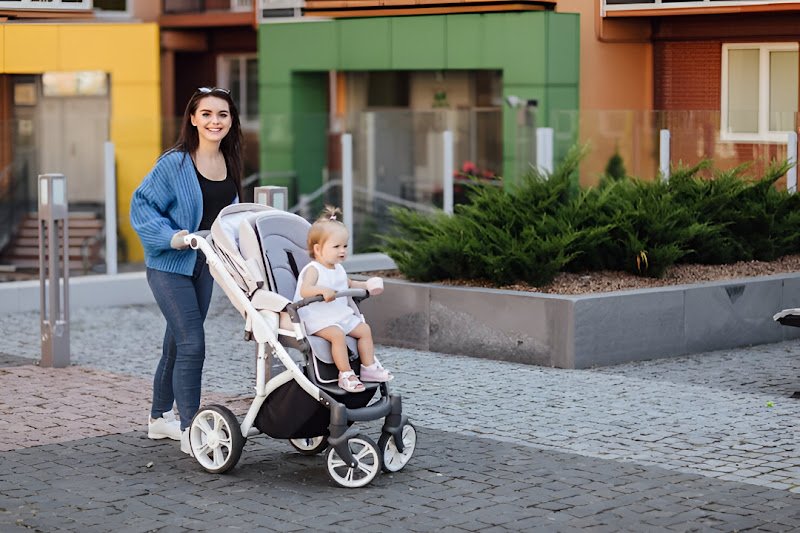
Community ABA learning applies the principles of ABA outside of the therapy room-for example, in parks, grocery stores, libraries, and recreational centers-so kids learn to generalize their skills across all environments and people.
For example, a child would be able to practice communication in ordering a meal in a restaurant, socialization during a group outing in a park, and gain awareness related to safety while crossing the street in the busy part of the city. Indeed, it is through such practical training in real life that children come to understand behavior-not just with respect to “what,” but also “when” and “how.”
The contingency model of teaching relies on practical experience that is structured yet flexible; the therapist easily modifies teaching methods to immediately follow the child’s response. Such a model allows opportunities for children to interact with their peers and the greater community in a meaningful way, an important ingredient in fostering independence.
The Power of Real-World Learning
Children tend to pick up more when the experiences are natural and relevant to them. Every outing in a community-based ABA program is an opportunity for learning.
For instance, such a common outing as going for groceries can mean so much more than just shopping. It means learning to be patient in lines, following a list, communicating with clerks of the store, and understanding money. A trip to the playground becomes an opportunity to practice taking turns, sharing, and dealing with frustration when play doesn’t go as expected.
It is the real-life environment where real change actually takes place. The generalization of the skills learnt from within the treatment to the general environment begins in children and makes the learning far more meaningful and durable. Generalization, especially as related to social communication and adaptive behaviors, has been extremely difficult to achieve from structured environments.
Important benefits of community-based ABA learning
1. Encourages Generalization of Skills
Perhaps the biggest benefit to community-based ABA is that of generalization-or the degree in which learned behaviors will generalize across environments and persons. A child who learns greetings in a therapy room does not automatically greet schoolmates or other children in the community. The more varied and numerous the settings in which a skill is practiced, the more flexible and functional it will be in naturalistic settings.
2. Develops social confidence.
Being in the community allows the child to practice socialization organically, be it at the library or talking to a cashier. These provide chances to develop social confidence, communication, and knowledge of social norms. It is these experiences that decrease anxiety and, over time, make one feel more comfortable in settings that are unfamiliar.
3. It encourages independence in activities of daily living.
Community-based ABA gives them those vital experiences in taking the bus, ordering food, and using personal space out in the community. In fact, this is often better preparation for later life, with practical lessons in self-control, safety, and problem-solving.
4. More Family Involvement
These ABA sessions involve the parents very much, and the location is often out in the community. The therapist encourages the family to continue the reinforcement outside the direct therapy time, since this will further the learning at home and within the daily routine, bringing consistency and therefore hastening progress.
5. All are welcome, one and all.
Community-based ABA furthers the cause of inclusion in that it allows children to participate in many varied activities out in the community. This benefits the child while serving to educate the greater community about neurodiverse populations and how to accept them. In such a way, when these children become more confident in their interactions, they are building bridges of understanding that enrich everyone involved.
The Role of the Therapist in Community-Based ABA
Community-based therapy is one setting of ABA that heavily involves therapists in planning and conducting a session. To this end, a therapist does an in-depth assessment of the individual by determining the environments which would best suit and be most beneficial to a child. Additionally, the therapist also prepares structured activities targeting particular goals.
For example, the ABA therapist may take them on an outing to a café and work with them on such skills as waiting, communicating, and exchanging money. Every interaction has a purpose and is based upon data, with close monitoring for progress. In time, as the child becomes more independent, the therapist will begin to fade the support so that confidence in self-reliance is fostered.
The therapist works with the parents, teachers, and community members in developing a supportive learning network by assuring reinforcement occurs across all settings.
Examples of community-based learning activities are:
Shopping Outings: Practice budgeting, identifying items, and using appropriate conversational exchanges with store employees.
- Food in Restaurants: How to read menus, order food, and handle social situations.
- Public Transportation Practice: Teaches them to follow the schedule, keep themselves safe, and respond properly according to the given directions.
- Library Visits: developing attention span, learning to take turns, and following rules in a shared environment.
- Leisure activities: This includes sports, art classes, or community events aimed at working on teamwork and cooperation.
Each one of these has been devised in conformation with the ABA principles: breaking down complex behaviors into manageable steps, reinforcing the desired ones, and gradually increasing independence.
Why Community-Based ABA Matters
Children need experiences and chances to practice what they’ve learned outside the confines of therapy. Community-based ABA learning bridges the gap between structured teaching and real-life functioning. It fosters behavioral growth, emotional resilience, and confidence. Real-life community experiences teach kids how to surmount difficulties, communicate effectively, and relate well with others. This will not only be helpful in childhood but also forms the base on which lifelong independence and fulfillment exist.
Finding the Right Support
Community-based ABA learning for a child means seeking out therapy providers that emphasize individualized care, family collaboration, and real-world skill development. To experts well-versed in ABA, this can be done through personalized programming, catering to a child’s strengths, challenges, and goals; hence, assuring real progress. Many centers nowadays have flexible programs that include home, school, and community settings in one comprehensive support system through all phases of development.
Conclusion
Community-based ABA learning is a strong evolution of how children learn to develop life skills. This empowers kids to practice, adapt, and grow more meaningfully because it takes therapy from the confines of traditional settings into real-world environments. With the help of active participation, social interaction, and guided independence, they gain enough confidence to reach out to others, moving within their communities with greater ease. Once this is applied within daily life, the progress a family will see will be transformational enough to let every child shine in his or her special way.