
Every craftsman reaches a point where progress slows down—not because of a lack of ideas, but because the body starts setting limits. The hands tire sooner. Focus breaks faster. Precision requires more effort than it once did. This moment often arrives quietly, hidden inside long working hours and small daily frustrations.
For many makers, this is the moment they realize an uncomfortable truth: skill alone is not enough. The tools you choose will shape not only the quality of your work, but also how long you can keep doing it.
Engraving is a perfect example of this reality. It is one of the most demanding crafts for the hands, requiring control, pressure, and consistency for every single cut. When the tools fight against the body, even the most experienced engraver will eventually feel the cost.
Why Skill Is Not the Only Factor in Great Work
Craftsmanship is often romanticized as pure talent and discipline. But in real workshops, craftsmanship is also about efficiency, comfort, and sustainability. When tools require excessive force, the maker compensates with effort. Over time, that effort turns into strain.
The best work is not created when the body is exhausted. It is created when movement feels natural, when the tool responds instantly, and when the hand can focus on direction instead of power. This is why professional craftsmen eventually stop asking “Can I do this?” and start asking “Should my tools be doing more of this work?”
The Hidden Cost of Fighting Your Tools
Most engravers begin their journey with manual tools. This is natural and necessary. But many never move beyond them, even when the physical cost becomes obvious. They accept pain as part of the craft, believing that endurance equals dedication.
The problem with this mindset is that it limits both creativity and career length. When hands are tired, designs become simpler. When wrists hurt, lines become shorter. Over time, ambition shrinks to match physical comfort. This happens slowly, almost invisibly.
Modern tools exist to prevent this, not to replace skill, but to protect it.
Why Pneumatic Engraving Is a Turning Point for Many Makers
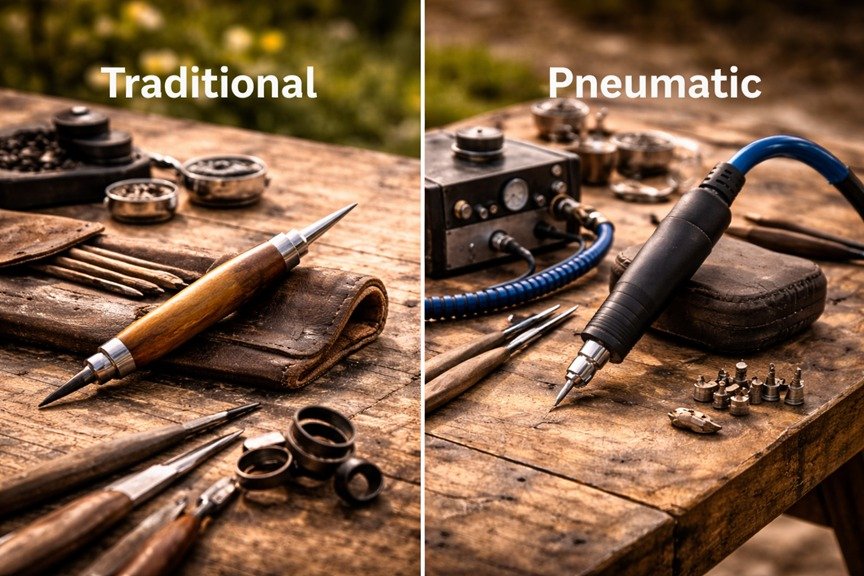
A pneumatic engraver shifts the workload away from the body and into the system. Instead of forcing the graver through metal, the craftsman guides it while compressed air delivers consistent impact. This changes the relationship between the hand and the tool completely.
The first noticeable change is control. The second is endurance. The third, often unexpected, is creativity. When physical resistance disappears, ideas flow more freely. Engraving stops feeling like labor and becomes what it should be—a controlled, expressive process.
This is why so many professionals describe pneumatic engraving as a turning point rather than an upgrade.
How Better Tools Extend a Craftsman’s Career
Long-term craftsmanship is about sustainability. Hands that last longer create better work over time. Pneumatic systems reduce strain on joints and muscles, allowing engravers to work comfortably for longer periods without losing precision.
Many experienced makers wish they had switched earlier. Not because their old tools were bad, but because the new tools protect what matters most: the ability to keep creating.
Why Katway Tools Are Built for Real Workshops
Katway has earned trust among professional makers because they design tools with daily use in mind. Their systems are compact, balanced, and reliable, built to fit naturally into real workshops instead of demanding constant adjustments.
Their pneumatic engraver collection is especially popular among independent makers and small studios because it offers flexibility. Users can choose simple engraving setups or integrated systems that support multiple functions without cluttering the workspace. This adaptability allows tools to grow alongside the maker.
When Tools Work Together, Creativity Flows Faster
A workshop is not just a space—it is a system. When tools are poorly matched, work slows down. When they are designed to work together, everything feels easier.
Integrated pneumatic engraving systems reduce the need to switch machines, rearrange cables, or adjust settings. The engraver moves naturally from one step to the next. This smooth workflow saves time, but more importantly, it preserves focus.
Creativity thrives when the process is uninterrupted.
Why Modern Makers Value Precision Over Tradition
Tradition is important, but it should not become a limitation. Many great crafts have evolved by embracing better tools while preserving skill. Engraving is no different.
Pneumatic engraving does not remove craftsmanship—it refines it. It allows makers to achieve consistent results on hard materials, fine jewelry, and detailed surfaces without sacrificing control. Precision becomes repeatable, not exhausting.
This is why modern workshops increasingly choose tools based on performance, not nostalgia.
Learning Faster and Growing With Confidence
Better tools also change how skills develop. Beginners learn faster when they are not struggling with pressure control. Intermediate engravers grow faster when fatigue is removed from practice. Professionals push boundaries when tools stop holding them back.
Pneumatic engraving systems support growth at every level. They make learning more efficient and mastery more achievable, not by simplifying the craft, but by removing unnecessary obstacles.
The Relationship Between Tools and Identity
Over time, tools become part of a maker’s identity. They influence style, technique, and even the types of projects accepted. When tools feel like partners instead of obstacles, work becomes more confident and expressive.
Choosing better tools is not a sign of weakness. It is a sign of commitment to the craft.
Why the Future of Craftsmanship Is Thoughtful Tool Choice
Modern craftsmanship is about longevity. It is about creating a career that lasts decades, not just years. This requires tools that respect the body, support creativity, and adapt to changing needs.
Pneumatic engraving fits naturally into this future. It allows makers to work better today while protecting their ability to work tomorrow.
Final Thoughts: Tools Are Not Just Equipment, They Are Decisions
Every tool choice is a decision about how you want to work. About how long you want to work. About the kind of craft you want to build.
A pneumatic engraver is not just an upgrade—it is a commitment to precision, sustainability, and long-term creativity. For makers who care about both their work and their future, choosing the right tools is one of the most important decisions they will ever make.
