
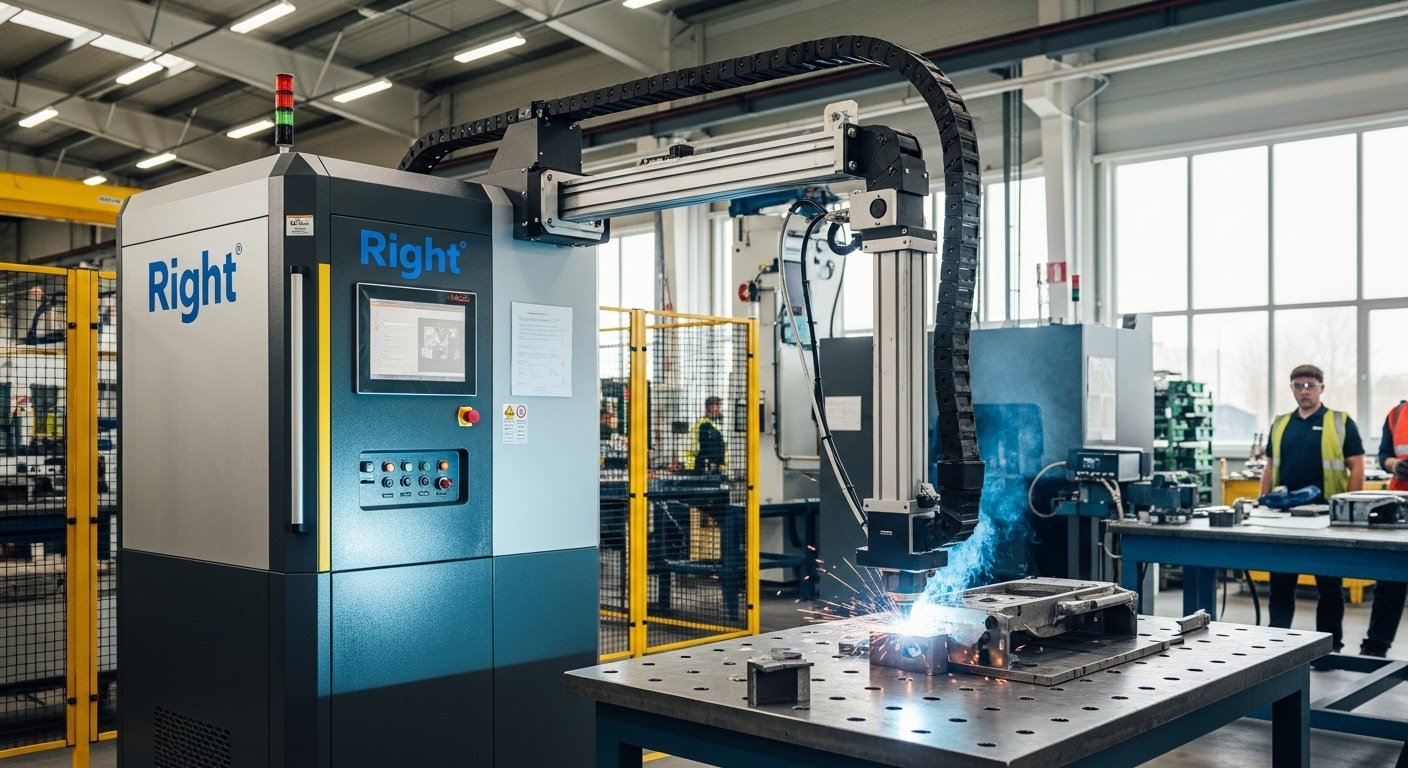
If you weld regularly, you have probably felt the same bottlenecks: parts that warp and need straightening, weld quality that varies by operator, and schedules that slip because grinding and rework take longer than the weld itself. A modern fiber laser welder can reduce heat input and improve consistency, but only if you match the system to your duty cycle, floor space, and part-building process.
Making an Informed Choice
Laser welding is no longer limited to fully automated lines. Denaliweld groups its lineup into practical categories to help you compare portability, cooling styles, and paths to automation.
Where a Fiber Laser Welder Fits
Role in Fabrication
Laser welding concentrates energy into a small spot, so less heat is transferred to the surrounding metal. That often means less distortion and a narrower heat-affected zone, reducing straightening and cosmetic cleanup. You typically see the biggest payoff on thin sections, visible seams, and assemblies where alignment matters.
Industrial vs. Small-Scale Contexts
In production, you typically prioritize repeatability, uptime, and settings that multiple operators can run. In smaller shops, you often need flexibility, so quick setup and easy movement matter more. Either way, trial a fiber laser welder on your most common joints and judge results by finishing time, not just bead appearance.
Core Configuration Categories to Compare
Air-Cooled vs. Water-Cooled
Air-cooled systems are often chosen for a smaller footprint and easier mobility, as they do not require a separate chiller loop. Water-cooled systems are more common when you weld for long stretches and want stable performance at higher sustained output. Focus your decision on continuous run time, how often you move the machine, and the space you can dedicate to cooling hardware.
Handheld vs. Automation
Handheld operation is well-suited to high-mix work because it allows you to reach awkward joints and switch between jobs quickly, but fit-up and surface prep still drive results. Automation-oriented setups are best suited to repetitive tasks where cycle time and repeatability are most critical. Denaliweld describes cobot-ready systems that let you switch between manual and automated modes and record welding data, which can be useful if you plan to scale output while limiting variability.
Ultra-Portable Options
Ultra-portable designs are valuable when you work in tight spaces or travel to the job. Validate performance on your thickest common parts and your real joint access, because portability only helps if the weld meets your acceptance criteria.
| Option | Best For | Watchouts |
| Air-cooled | Mobility and simple setup | Confirm duty cycle for long runs |
| Water-cooled | Sustained production | Plan chiller space and upkeep |
| Handheld | High-mix work | Standardize fit-up and prep |
| Automation-ready | Repeat parts | Fixtures and programming effort |
| Ultra-portable | Tight spaces and field work | Validate on thick sections |
Welding Outcome and Process Fit
Precision and Distortion
If distortion is the main issue, evaluate more than bead appearance. Check whether parts remain flat, whether edges remain aligned, and how much finishing is still required. You will get better outcomes when you control joint gap, keep surfaces clean, and clamp consistently.
Speed and Repeatability
Speed matters only if the whole job moves faster. The bigger gain is repeatability, meaning you can run the same joint and get the same result with minimal adjustment. That is why saved recipes and clear parameter menus matter. Once settings are proven on real parts, a fiber laser welder can become a dependable production tool.
Material and Joint Flexibility
Test your common alloys and thickness ranges, then confirm on your real joint designs and normal surface conditions. Keep comparisons fair by using the same fixture and the same prep method each time.
Adjacent Capabilities to Consider
Laser Cleaning for Prep
Oils, oxides, and light rust can increase defects and lead to inconsistent results. If parts arrive in mixed condition, laser cleaning can be a useful prep step to standardize the surface before welding. Evaluate whether that consistency reduces rework enough to be worth the added step.
Controls and Presets
If multiple operators will run the machine, prioritize usability. Saved recipes, clear guidance on wire feeding and shielding gas, and routine lens checks help you reduce shift-to-shift drift.
Automation Pathways
If automation is on your roadmap, plan for it early. You will need fixtures, repeatable part location, and a simple method to verify that settings have not drifted.
Safety, Certification, and Support
Laser Safety Essentials
High-power laser welding can create serious hazards from direct and scattered radiation. Plan controlled access to the welding area, use rated eye protection, and add barriers or curtains designed for laser work.
Certification Signals
Certifications can indicate documentation and testing, but they do not replace proof of your own. Treat them as a filter, then validate performance with your own samples and acceptance criteria.
Warranty and Service
Support matters because downtime rarely stems from a single part. Plan for optics, consumables, troubleshooting, and response time. Denaliweld offers a three-year warranty and overseas services, including installation, commissioning, training, and maintenance.
Conclusion
Start with duty cycle, space, and quality targets, then compare cooling style, portability, and the path to automation. Validate on real parts and measure distortion and finishing time, not just the bead. With a solid safety plan and dependable support, a fiber laser welder can help you reduce rework and keep jobs moving.