
You might be here because something has been nagging at you. Maybe you found a small sore in your mouth that will not heal, or your jaw has felt stiff, or you simply realized it has been a long time since your last checkup with a dentist in Scarsdale and you are wondering what you might have missed. That quiet “what if” in the back of your mind can be exhausting.end
It is completely normal to feel uneasy about oral cancer. The word “cancer” alone can send your thoughts racing, and you might be afraid that seeing a dentist will bring bad news. At the same time, you probably sense that ignoring things does not really protect you. It just postpones clarity.
Here is the simple truth. Regular visits with a general dentist are one of the easiest ways to catch oral cancer when it is small, easier to treat, and less likely to turn your life upside down. General dentistry is not only about cleanings and fillings. It is also your frontline defense against serious disease in your mouth, tongue, and throat.
So, where does that leave you? You do not need to become an expert in cancer. You just need to understand how early checks work, what to watch for, and how a general dentist quietly protects your health in the background.
Why is early oral cancer detection such a big deal?
Oral cancer often starts quietly. A tiny white or red patch, a sore that does not heal, a lump that feels a little strange. Many people shrug these off as “just irritation” from biting their cheek or a rough tooth. Because of this, diagnosis is often delayed until symptoms are obvious, which is when treatment can be harder and outcomes less favorable.
According to the National Institute of Dental and Craniofacial Research, oral and oropharyngeal cancers are frequently linked to tobacco, alcohol, and some viral infections, yet they can also appear in people without clear risk factors. You can read more about common causes and signs in this overview on oral cancer from NIDCR.
Here is the part that can feel unfair. Early oral cancer does not always hurt. You might feel completely fine. No pain. No dramatic changes. That is why relying on symptoms alone can be risky. By the time something hurts enough to push you into a chair, the disease may already be advanced.
This is where a general dentist’s role in early oral cancer screening becomes so important. During a routine exam, your dentist is trained to notice subtle color changes, texture differences, or small growths that you would not think twice about. What feels like “nothing” to you might be a small red flag to them.
What exactly does a general dentist look for during an oral cancer check?
You might picture your dental visit as a quick look at your teeth and a cleaning, then you are sent on your way. In reality, a careful general dentist is watching much more than your smile.
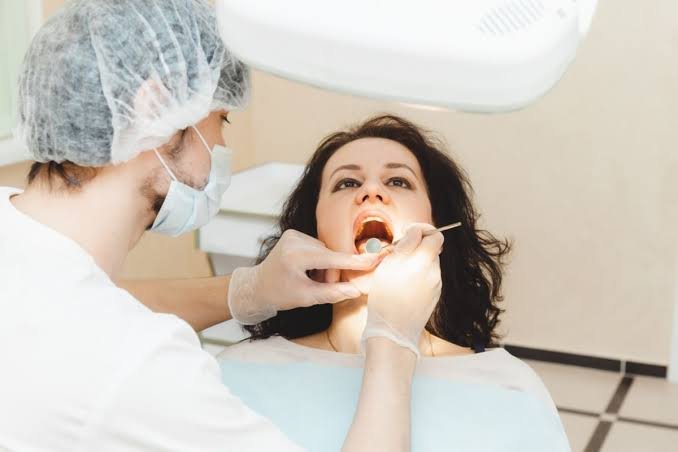
During a typical exam for early detection of mouth cancer, a general dentist will usually:
• Look at your lips, cheeks, gums, tongue, and the floor and roof of your mouth for patches, sores, or unusual spots.
• Gently pull your tongue from side to side to see areas you cannot see in the mirror.
• Feel under your jaw and along your neck for lumps or swollen lymph nodes.
• Ask about changes you have noticed, like a chronic sore throat, difficulty swallowing, or voice changes.
None of this is dramatic. It is quiet, methodical, and often takes only a few minutes. Yet those few minutes can mean the difference between catching a small, treatable lesion and facing a larger, more complicated diagnosis later on.
If something looks suspicious, your dentist might schedule a follow-up, take a photo to monitor changes, or refer you to an oral surgeon or specialist for a biopsy. That referral is not a sentence. It is a step toward clarity and, if needed, early treatment.
What happens if you wait, and what changes if you go sooner?
When you are nervous, postponing an appointment can feel like relief in the moment. Unfortunately, that relief is short lived, because the “what if” tends to grow louder over time. You may find yourself checking the same spot with your tongue every day, wondering if it has changed, and spending late nights searching symptoms online.
Financial worries can also creep in. You might think, “If something is wrong, the treatment will be expensive, so I would rather not know.” Yet catching a problem early can often mean simpler procedures, fewer appointments, and lower costs over time. Advanced disease often requires surgery, radiation, or other intensive care, which can be far more disruptive and expensive.
There is emotional weight too. Early detection through routine general dentistry cancer screening can spare you and your family from more aggressive treatments. When oral cancer is found and treated before it spreads, survival rates are significantly higher and quality of life after treatment is often better. A current clinical review on oral cavity cancer from NCBI reinforces how much stage at diagnosis affects outcomes.
So, you might ask, “If I feel fine, is it really worth going?” The answer is that the best time to be checked is when you feel generally well. The purpose is not to confirm your worst fears. It is to either reassure you that things look normal, or to catch a small concern before it grows into a crisis.
How does general dentistry compare to “waiting and watching” on your own?
To make the decision clearer, it can help to compare relying on self monitoring with regular checks from a general dentist. The goal is not to scare you, but to show you where professional care quietly shifts the odds in your favor.
| Approach | What It Looks Like | Pros | Risks / Limitations |
|---|---|---|---|
| “Wait and see” on your own | You notice a sore, patch, or lump and decide to watch it for weeks or months. | No immediate appointment. Feels easier in the short term. | You may miss subtle changes. Pain often appears late. If it is cancer, it can progress while you wait. |
| Occasional internet self diagnosis | Searching symptoms online and comparing photos. | Quick access to general information. Can raise awareness of warning signs. | Online images can be misleading. Increases anxiety. Cannot replace an in person exam or biopsy. |
| Regular general dental exams with oral cancer screening | Routine checkups where your dentist examines your mouth, tongue, and neck. | Trained eyes can spot early changes. Greater chance of catching issues when they are smaller and easier to treat. | Requires scheduling and attending visits. Mild cost, though often less than treating advanced problems. |
When you see it laid out this way, the “do nothing” path often carries more long term risk, even if it feels easier right now. A simple exam with a general dentist gives you information, and information gives you choices.
What can you do right now to protect yourself?
You do not need to overhaul your entire life to lower your risk and feel more secure. Small, steady steps make a real difference.
1. Schedule a routine visit and ask specifically about an oral cancer screening
If it has been more than a year since your last dental exam, or if you have a sore or patch that has lasted longer than two weeks, it is time to book an appointment. When you call, you can simply say, “I would like a checkup, and I am also concerned about oral cancer. Can you make sure that is part of the exam?”
This one sentence alerts the office to your concern and invites your general dentist to slow down and explain what they are seeing. You are not being “dramatic.” You are being clear about what matters to you.
2. Learn the key warning signs, then stop checking them obsessively
It helps to know what to watch for. Common warning signs include a sore that does not heal, a lump or thick area, white or red patches, numbness, or difficulty swallowing. If you notice something like this that lasts longer than two weeks, that is your cue to see a dentist or doctor.
What you do not need to do is inspect your mouth every hour or compare every spot to online photos. That usually increases anxiety. Instead, do a quick check once in a while, and if you notice a change that lingers, hand the worry over to a professional.
3. Reduce the biggest risk factors you can control
You cannot change everything, and you do not need to be perfect, but small shifts lower your risk over time. If you smoke or use other tobacco products, consider this another reason to cut back or quit. If you drink alcohol heavily, especially in combination with tobacco, your risk is higher, so reducing intake can help.
Protecting your lips from the sun, staying on top of dental cleanings, and speaking up about any changes in your mouth all add up. You are not just avoiding disease. You are building a habit of paying attention to your health without panic.
Where should you go from here?
If you have been feeling a quiet worry about oral cancer, you are not alone, and you are not powerless. A trusted general dentist can be your partner in catching small problems early, explaining what is normal and what is not, and guiding you toward care if something needs attention.
You do not need to wait for pain. You do not need to have all the answers. Your next step can be as simple as choosing a general dentist you feel comfortable with and booking that routine visit. That one decision can give you clarity, calm your mind, and protect your health in ways you might never see, simply because trouble was caught before it became obvious.
You deserve that peace of mind. Start with a standard checkup, ask for an oral cancer screening, and give yourself the chance to know, rather than fear, what is going on in your own mouth.