
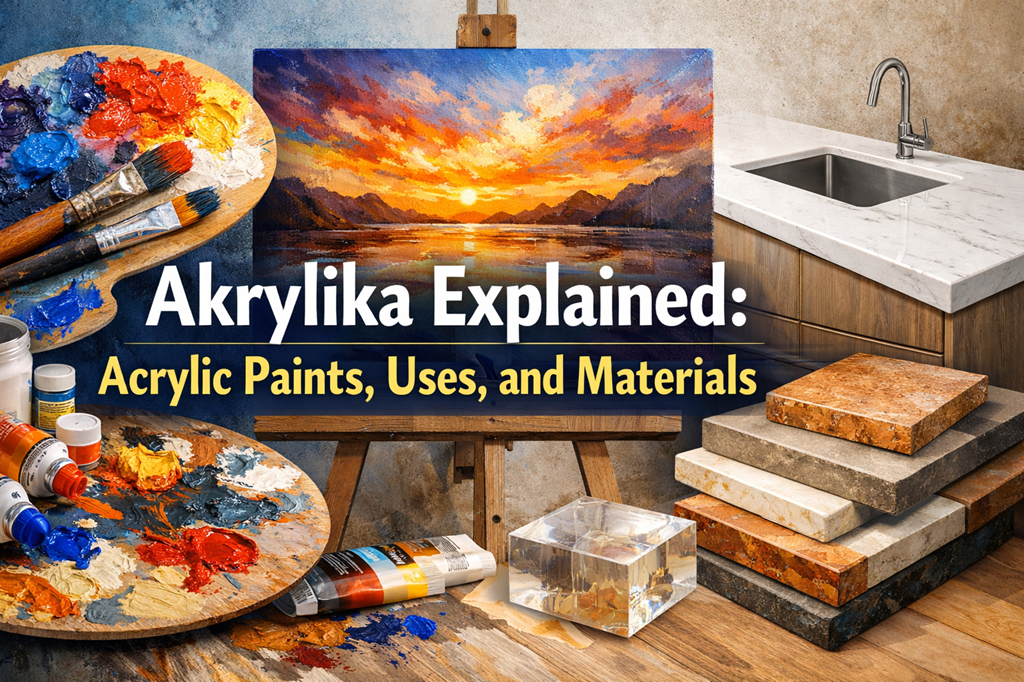
Akrylika (Ακρυλικά) is the Greek term used to describe acrylics, a broad family of materials known for their flexibility, durability, and ease of use. In everyday language, the term most often refers to acrylic paints used in art and hobby crafts. At the same time, it can also describe acrylic-based synthetic materials, such as acrylic resin and solid surface products used in interior design and construction.
This guide covers both definitions to provide a complete, accurate understanding of akrylika and its practical applications.
What Does Akrylika Mean?
In Greek, akrylika generally refers to materials made with acrylic polymers. The meaning changes slightly depending on context:
-
In art and crafts, it usually means acrylic paints and related painting materials.
-
In design and construction, it often refers to acrylic resin products or solid surface sheets.
Although the applications differ, both rely on the same core technology: acrylic polymers that provide strength, stability, and long-lasting performance.
Akrylika in Art: Understanding Acrylic Paints
What Are Acrylic Paints?
Acrylic paint is a fast-drying painting medium made by suspending pigment in an acrylic polymer emulsion. While the paint is wet, it mixes easily with water. Once it dries, it forms a durable, water-resistant layer that permanently holds the color in place.
Because of this structure, acrylic paint combines the simplicity of water-based materials with the strength of synthetic binders.
Key Properties of Acrylic Paints
Acrylic paints are popular because they balance control, speed, and durability.
-
Water-soluble when wet
Artists can thin paint with water and clean tools easily. -
Water-resistant when dry
Finished artwork stays stable and protected. -
Quick drying time
Layers dry within minutes, allowing faster progress. -
Strong color intensity
Pigments remain bright and consistent over time. -
Wide surface compatibility
Acrylics work on canvas, paper, wood, metal, fabric, and more when prepared correctly.
These properties make acrylic paint suitable for beginners, students, and professional artists alike.
Why Artists Prefer Acrylic Paints
Artists value acrylics because they adapt to many techniques without complex preparation.
Watercolor-like effects
When diluted with water or medium, acrylic paint creates transparent washes similar to watercolor. However, once dry, the layer stays fixed and does not reactivate.
Oil-like texture
When applied thickly or mixed with gels, acrylic paint can resemble oil paint, producing bold strokes and visible texture without long drying times.
Fast layering
Because acrylic dries quickly, artists can build depth and detail in a single session. This speed supports experimentation and learning.
Akrylika Proetoimasia: Acrylic Preparation Materials
Professional-looking results often depend on preparation. In Greek art terminology, akrylika proetoimasia refers to acrylic preparation and support materials used before and during painting.
Common Acrylic Preparation Products
-
Gesso primers
Prepare surfaces, improve adhesion, and create an even base. -
Texture and modeling pastes
Add relief and structure to the surface. -
Gloss, satin, and matte mediums
Control transparency, shine, and paint flow. -
Flow improvers and retarders
Adjust drying time and brush movement.
Using the right preparation materials improves durability, consistency, and overall finish.
Akrylika Beyond Art: Acrylic Materials in Design
Acrylic Resin and Solid Surface Materials
Outside the art world, akrylika also describes acrylic-based materials used in architecture and interior design. One well-known example is Akrilika, an international holding company associated with acrylic solid surface products.
These materials combine natural minerals with acrylic resin, creating sheets that are strong, smooth, and easy to shape.
Key Characteristics of Acrylic Solid Surfaces
-
Non-porous structure
Resists moisture, stains, and bacteria. -
Seamless appearance
Joints can be bonded with minimal visibility. -
Repairable surface
Scratches and wear can often be restored. -
Design flexibility
Sheets can be cut, molded, and customized.
Common Applications
Acrylic solid surfaces are widely used in:
-
Kitchen and bathroom countertops
-
Furniture and cabinetry
-
Retail and hospitality interiors
-
Decorative wall and architectural elements
Designers choose these materials because they combine clean aesthetics with long-term reliability.
How Acrylic Technology Connects Art and Construction
Although acrylic paints and solid surface materials serve different purposes, they share important qualities:
-
Chemical stability
-
Resistance to moisture
-
Long-lasting performance
-
Visual consistency
This shared foundation explains why acrylic-based materials appear in both creative studios and modern buildings.
Where to Find Acrylic Art Supplies in Greece
Artists in Greece can find a wide selection of acrylic products through trusted retailers.
-
Plaisio
Offers acrylic paints and sets from brands such as SentioArt and Winsor & Newton. -
Skroutz
Allows users to compare prices across thousands of acrylic-related products. -
Artmie
Specializes in professional-grade acrylic paints, primers, and texture pastes.
Buying from reputable suppliers ensures consistent quality and reliable results.
How to Choose the Right Acrylic Products
For Artists and Hobbyists
-
Start with student-grade paints for practice and learning.
-
Move to artist-grade paints when color strength and consistency matter more.
-
Choose mediums based on technique, not guesswork.
For Designers and Builders
-
Confirm that solid surface materials are certified and non-porous.
-
Ask about repair options and long-term maintenance.
-
Work with experienced fabricators for best results.
Thoughtful selection saves time, effort, and cost.
Final Thoughts
Akrylika represents a modern approach to both creative expression and functional design. In art, acrylic paints offer speed, flexibility, and strong visual impact. In interiors, acrylic-based materials deliver clean surfaces, durability, and repairability.
Because of this versatility, acrylics continue to support artists, designers, and builders who value reliability, clarity, and creative freedom.