
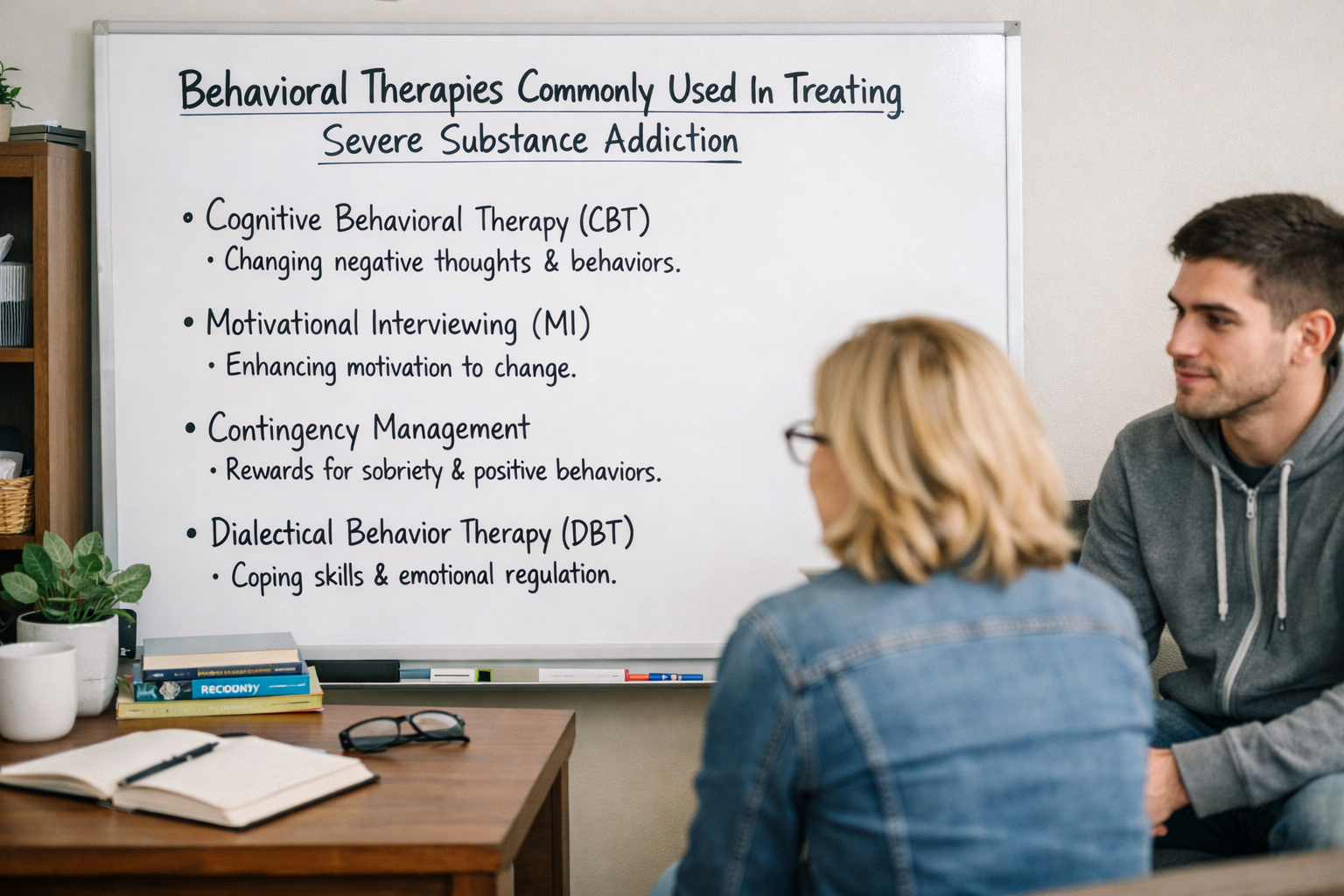
Severe substance addiction affects behavior, decision-making, and emotional stability in deeply disruptive ways. Effective recovery approaches focus on reshaping harmful patterns while strengthening coping skills that support long-term change. Behavioral therapies play a central role in this process by helping individuals understand triggers, build healthier habits, and maintain accountability throughout recovery.
Recovery plans sometimes integrate structured addiction treatment programs that emphasize behavioral change alongside medical and emotional support. These therapies address both the psychological and behavioral aspects of substance use, allowing individuals to replace destructive routines with stable, goal-oriented actions.
Core Behavioral Therapy Approaches
Cognitive Behavioral Therapy (CBT)
Cognitive Behavioral Therapy focuses on identifying negative thought patterns that influence harmful behaviors. It teaches individuals how to recognize distorted thinking and replace it with practical, reality-based perspectives. This structured approach strengthens emotional regulation and promotes healthier decision-making in high-risk situations.
CBT also emphasizes skill-building, including stress management and relapse prevention strategies. Individuals learn to anticipate triggers and respond with controlled actions rather than impulsive behavior. Regular practice reinforces these skills, making them more effective over time.
Contingency Management
Contingency Management uses structured rewards to reinforce positive behaviors such as sobriety and program participation. This method relies on clear, measurable goals and consistent incentives that encourage adherence to recovery plans. Tangible rewards help strengthen motivation and create a sense of achievement.
The approach supports consistent engagement by making progress visible and rewarding. It also builds a connection between effort and outcome, helping individuals stay focused during challenging phases of recovery.
Motivational Enhancement Therapy (MET)
Motivational Enhancement Therapy helps individuals strengthen their internal motivation to change. It focuses on resolving ambivalence about recovery and encourages commitment through guided conversations and goal setting. The process respects individual readiness while gently steering toward positive decisions.
MET sessions sometimes involve identifying personal values and aligning them with recovery goals. This alignment creates a stronger sense of purpose and encourages sustained effort in treatment programs.
Supportive Behavioral Strategies For Long-Term Stability
Family-Based Therapy
Family-based therapy addresses the influence of family dynamics on substance use behavior. It helps rebuild communication, establish healthy boundaries, and create a supportive home environment. Involving family members improves understanding and reduces conflict that may contribute to relapse.
Support from close relationships strengthens accountability and emotional resilience. Structured sessions also provide tools for families to respond effectively during difficult moments.
Dialectical Behavior Therapy (DBT)
Dialectical Behavior Therapy focuses on emotional regulation, distress tolerance, and interpersonal effectiveness. It is particularly useful for individuals who experience intense emotions that interfere with recovery efforts. DBT teaches practical techniques to manage overwhelming feelings without turning to substance use.
The structured format includes both individual sessions and skill-building exercises. These components work together to improve emotional balance and reduce impulsive actions.
Behavioral Activation Techniques
Behavioral activation encourages engagement in meaningful activities that promote positive reinforcement. It helps replace idle or harmful routines with productive actions that support recovery goals. Structured scheduling plays a key role in maintaining consistency.
This method also reduces the likelihood of relapse by minimizing unstructured time. Incorporating purposeful activities builds confidence and reinforces a sense of progress within addiction treatment plans.
How Can a Skilled Therapist Support Severe Addiction Recovery?
Professional behavioral therapy services provide structured care tailored to individual triggers and behavioral patterns. Licensed specialists use targeted methods to improve emotional control and reinforce healthier decisions.
Ongoing clinical support helps track progress and adjust treatment as needed. Consistent guidance strengthens coping skills and supports long-term recovery stability. Behavioral therapies provide a structured path toward recovery by addressing the patterns that sustain substance use. Consistent application of these therapies helps individuals regain control and establish healthier, more sustainable lifestyles.