
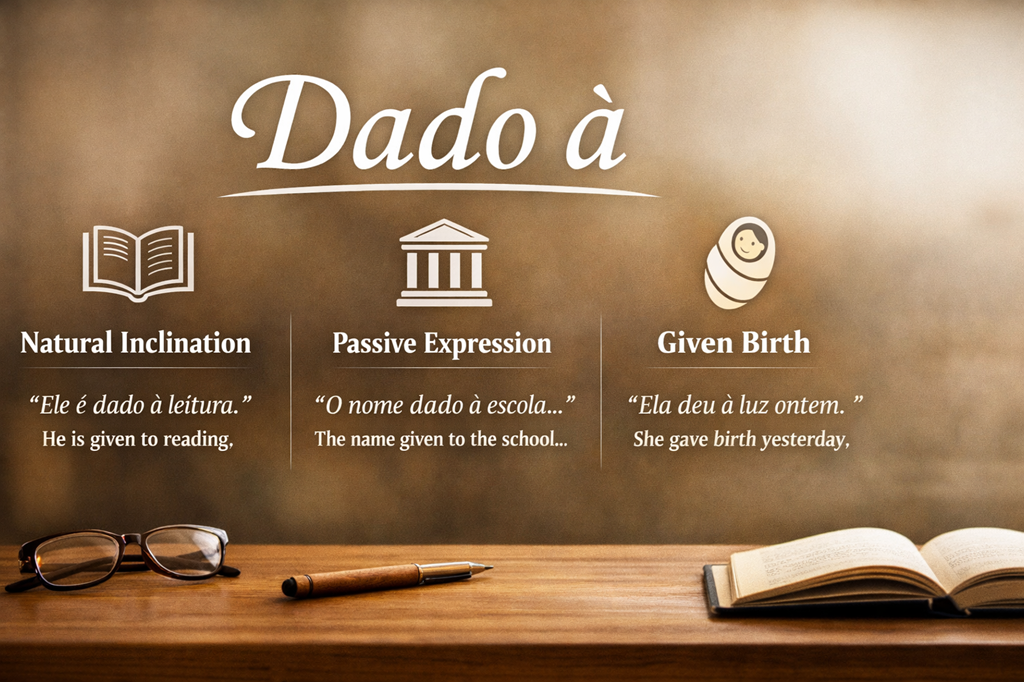
What Does Dado à Mean?
Dado à is a Portuguese linguistic expression used to describe a natural inclination, tendency, or predisposition toward something. In practical terms, it means “given to” or “inclined toward.”
Rather than describing an action someone chooses, this expression explains what comes naturally to a person. Therefore, it highlights inner disposition instead of effort or intention. Because of this, it often appears in reflective writing, character descriptions, and formal communication.
For example, when someone is described as inclined toward reading or reflection, the expression signals a lasting tendency rather than a temporary habit.
Linguistic Origin and Grammatical Structure
Where the Expression Comes From
The phrase comes from Romance-language grammar and developed through Portuguese usage. It combines two elements:
-
Dado, the past participle of the verb meaning to give
-
À, the contraction of the preposition a with the feminine article a
Together, the structure literally means “given toward something,” which explains how the expression functions in modern language.
How It Works Grammatically
Grammatically, the expression functions as an adjectival phrase. It modifies the subject by describing disposition rather than action. As a result, it typically appears with verbs of state and is followed by abstract nouns such as habits, traits, or preferences.
The Core Concept Behind the Expression
Inclination Rather Than Choice
At its core, Dado à expresses inclination, not decision. It does not imply planning, obligation, or conscious effort. Instead, it points to what feels natural and consistent over time.
Because of this, the expression works best when describing personality traits, long-term behaviors, or intellectual tendencies.
Stability Over Time
In most contexts, the meaning suggests continuity. While behavior can change, the tendency described usually remains recognizable across different situations. Therefore, the expression carries a sense of permanence without rigidity.
How to Use Dado à Correctly in Sentences
Standard Sentence Structure
The most common and correct structure is:
Subject + state verb + expression + abstract noun
This structure keeps the meaning clear while maintaining grammatical accuracy. Additionally, it helps the sentence sound natural and balanced.
Agreement Rules You Must Follow
Because the expression behaves like an adjective, it must agree with the subject in gender and number:
-
Masculine singular: dado à
-
Feminine singular: dada à
-
Masculine plural: dados a
-
Feminine plural: dadas a
Correct agreement improves clarity and strengthens professional writing quality.
Using the Expression for Personal Traits or Habits
When applied to personality, Dado à describes traits shaped over time. It works especially well for qualities such as curiosity, patience, reflection, or discipline.
Because it avoids rigid labeling, the phrase sounds thoughtful and respectful. As a result, writers often choose it when precision and nuance matter.
Using It to Express Preferences or Inclinations
The expression also fits preferences that feel natural rather than forced. It explains what someone gravitates toward without implying effort or obligation.
Therefore, it frequently appears in analytical writing, professional profiles, and reflective narratives.
Common Mistakes to Avoid
Using It for Temporary States
Avoid applying the expression to short-term emotions or one-time actions. Doing so weakens its meaning and reduces accuracy.
Overusing the Phrase
Because it carries strong descriptive weight, repetition can hurt readability. Instead, strategic use improves flow and impact.
Confusing It With Similar Constructions
Some phrases look similar but serve different grammatical purposes. Precision matters, especially in formal or educational contexts.
Expression of Human Disposition
Dado à allows writers to describe human disposition with subtlety. Instead of defining identity rigidly, it communicates tendency while leaving room for growth and change.
Consequently, it supports emotionally intelligent communication that feels balanced and credible.
Cultural and Psychological Relevance
Culturally, the expression reflects a preference for thoughtful and nuanced language. Psychologically, it aligns with how people understand themselves as inclined rather than fixed.
Because of this alignment, it feels natural in reflective and descriptive writing across different contexts.
Modern Relevance in Digital Communication
In modern communication, clarity and authenticity matter more than ever. This expression supports both by allowing precise description without exaggeration.
Writers, educators, and professionals use it to add depth while maintaining a natural, accessible tone.
Synonyms and Natural Alternatives
Depending on context, suitable alternatives include:
-
Inclined toward
-
Prone to
-
Naturally drawn to
-
Tending toward
These options help vary language while preserving meaning and readability.
Why Dado à Matters in Thoughtful Expression
Dado à matters because it captures inclination without forcing certainty. It allows honest description while respecting complexity.
As a result, it builds trust, improves clarity, and strengthens written communication.
Future Use and Longevity
As language continues to value nuance and emotional awareness, expressions like this will remain relevant. Its flexibility ensures continued use in educational, professional, and reflective contexts.
Conclusion
Dado à is a precise linguistic expression that explains natural inclination with clarity and balance. When used correctly, it enriches writing by describing human tendencies without exaggeration or rigidity.
By understanding its meaning, structure, and proper usage, writers can apply it confidently in high-quality, trustworthy communication.