
Introduction: The Evolution of “Roughing It”
A modern glamping morning no longer feels rough at all.
You wake up on high-thread-count sheets inside a canvas tent that smells faintly of pine. Sunlight filters through the fabric. Outside, coffee is already brewing—pour-over, not instant. The air is cool, clean, and quiet enough that you can hear the wind move through the trees.
And then comes the familiar pause.
After breakfast, guests often ask the same unspoken question: Now what? Hiking sounds romantic in theory, but less appealing once you remember the steep incline, the sweat, and the fact that dinner reservations start in four hours. Driving breaks the spell entirely—engines, dust, roads.
This is the boredom gap in luxury camping. Guests pay a premium to be immersed in nature, yet lack an elegant way to explore it.
Glamping 2.0 isn’t about better tents or softer pillows. It’s about access. Forward-thinking campsites are closing that gap by curating “silent safari” experiences—using electric micro-mobility to let guests explore deeply, comfortably, and without breaking immersion.
The “Silent Safari” Aesthetic: Seeing Nature Without Disturbing It
There is a fundamental mismatch between luxury hospitality and traditional outdoor vehicles.
Gas ATVs are loud. They smell like exhaust. Wildlife hears them long before guests arrive. The experience becomes about noise and disruption, not observation.
Electric mobility changes that dynamic completely.
With a quiet motor, guests can move through forests, along fire roads, and across open terrain without announcing themselves. Deer linger instead of fleeing. Birds don’t scatter. The landscape feels alive rather than reactive.
This is where the modern electric dirt bike has evolved beyond its old stereotype.
It’s no longer just a machine for adrenaline seekers tearing through mud. In a hospitality context, it becomes a stealth tool—one that allows guests to observe fragile ecosystems without overwhelming them. The experience feels almost cinematic, as if nature is performing rather than retreating.
For luxury travelers, silence isn’t emptiness. It’s presence.
Accessibility: The Great Equalizer for Couples and Families
One of the most common friction points in outdoor travel is fitness disparity.
In many couples or families, one person wants to hike ten miles. Another would rather not. Knees, stamina, or simple preference can turn a shared trip into a compromise—or worse, separate activities.
Electric assist removes that tension.
With adjustable power levels, an e-bike allows a less athletic guest to keep pace effortlessly with a fitter partner. They arrive together. They experience the view together. No one feels held back, and no one feels punished.
Imagine a couple like Sarah and Mark. Sarah loves long hikes. Mark has a bad knee. On foot, their vacations involve negotiation and resentment. On an electric bike, Mark rides comfortably while Sarah dials down assistance when she wants more effort. They reach the ridge at the same time, still smiling, still talking.
Luxury travel isn’t about proving endurance. Guests don’t want to arrive at dinner sweaty, sore, and exhausted. They want the wind-in-your-hair feeling—without the physical toll.
E-bikes make nature inclusive without diluting it.
Expanding the Perimeter: Turning Two Miles into Twenty
On foot, most guests explore a two-mile radius around camp.
On a bike, that radius quietly expands to twenty.
This shift fundamentally changes how value is perceived. In a single morning, guests can visit the waterfall, the canyon overlook, and the hidden lake beyond the ridge. They can find a secluded spot for a picnic or a sunset that no car could reach.
The experience feels expansive, even if the campsite itself hasn’t changed.
From an operator’s perspective, this matters. Guests don’t just remember where they slept—they remember what they discovered. Exploration turns a static stay into a story worth retelling.
Selecting the Fleet: Why “Rugged” Really Means “Reliable”
This is the only place where hardware deserves to be discussed—because operators think in terms of durability, safety, and guest satisfaction, not specs for their own sake.
Standard city e-bikes fail quickly on gravel fire roads and forest paths. For hospitality use, you need a fat tire electric bike with a wide footprint that can float over sand, loose rocks, pine needles, and uneven terrain safely.
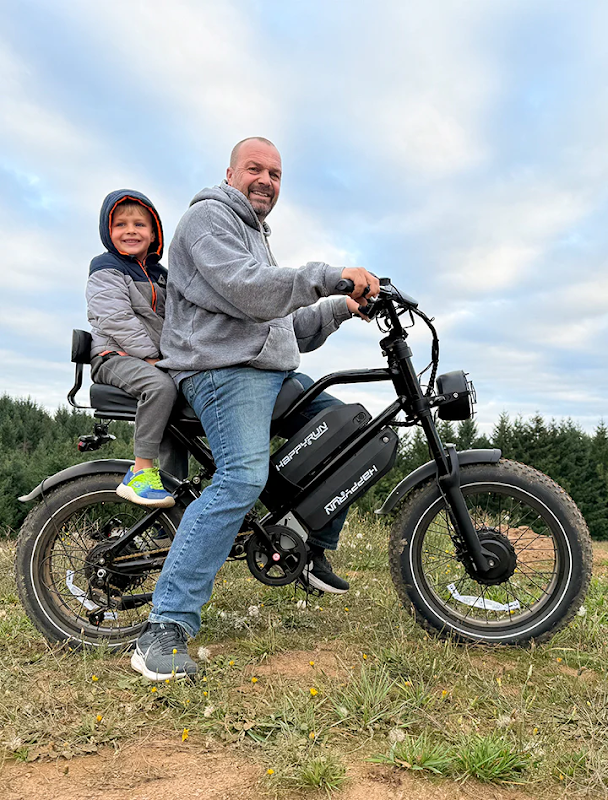
A strong example of this category is the HappyRun G70 Pro, often described by operators as a “campsite cruiser.”
Why it fits glamping use comes down to function:
- Two seats matter. Couples can ride together, turning transportation into a shared, romantic experience. Parents can bring a child along without splitting up.
- Dual motors with 5,000W combined peak power matter even more. With two people on board, torque—not top speed—gets guests back up the hill to camp without strain. Single motors often struggle here.
- A 48V 33Ah dual-battery system ensures bikes last all day. Operators don’t want to rotate charging every two hours; uptime is everything.
Fat tires and full suspension also play a safety role. Wider contact patches reduce slipping on gravel, while suspension smooths out bumps that might otherwise intimidate novice riders. For guests new to riding, this translates into confidence—and confidence is a luxury feature.
Operational ROI: Why Sites Are Investing
From a business standpoint, electric mobility checks every box.
E-bike rentals are high-margin add-ons. Maintenance is dramatically lower than gas ATVs—no oil changes, fewer moving parts, less downtime. The bikes are intuitive, reducing staff training needs.
Then there’s the marketing effect. Guests photographing themselves on distinctive bikes against scenic backdrops generate organic promotion. Every shared image becomes free advertising for the campsite’s experience offering.
The return isn’t just financial. It’s reputational.
Conclusion: The Memory Business
Glamping has always been about memories.
The tent is just accommodation. The real value lies in what guests do—the quiet ride through the forest, the shared climb to a viewpoint, the moment they realize they’ve explored more without working harder.
By offering high-quality electric mobility, campsites upgrade the guest experience from “sleeping in the woods” to actively discovering it.
Next time you book a glamping trip, check whether they offer a fleet. It doesn’t just change how you get around.
It changes what you remember.