
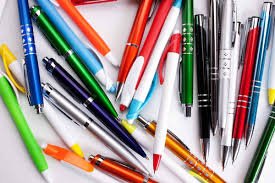
There is not a single office desk, classroom, handbag, or conference room that does not have at least one such object that is so mundane and routine that we hardly have to think about it: Disposable pens. They are cheap, readily available, and in many cases, they are freely offered by banks, events, hotels, and hospitals. Most people do not even pause to ponder how these little plastic tubes have changed the communication, education, and working processes significantly in the past century, owing to their simplicity.
The emergence of phones, laptops, and digital tools to take notes has made many people believe that handwriting is a dying art. But the truth of the matter is quite otherwise. Handwritten writing is still a popular activity in workstations, schools, and households all over the world. Even in the work of most professionals who dedicate a significant part of their time to the computer, there exist moments when there is no quicker or more convenient way to capture thoughts than to pick up a pen and jot down the idea before it fades away.
Disposable pens not only passed the test of smartphones: they turned out to be one of the most universal instruments of modern life. Their constant availability is not only convenient, but quick and convenient to a world that continues to rely on writing to think, create, and share ideas.
From Luxury to Everyday Object
Writing materials were class and education symbols a few hundred years ago. Ink was costly, and the quills had to be made properly; only a small number of individuals were in a position to afford individualized writing tools. Everything changed with the modern ballpoint. With the increase in mass production and the development of better manufacturing systems, the writing devices became accessible to almost everyone. People could no longer afford not to be able to write or write with ease in their hands. It was an art that could be exercised by students, office employees, and ordinary citizens daily.
This was increased by the use of disposable pens. None of the maintenance, none of the ink replenishment, none of the sensitive parts. Anybody could possess a number of them and use them without even thinking about them. By so doing, writing became more democratic with the assistance of the pen, even before digital technology did the same.
Why Simplicity Still Wins in a Digital World
Despite all the technological progress in the lives of people, there are still dozens of situations in daily life when digital solutions are either too slow or too demanding. It can be ready in seconds to write something in hand, and it may disrupt the creativity process to unlock a phone, open an application, and wait until a screen appears.
A teacher who has to mark a quiz does not wish to write comments on a machine. A nurse who does rounds cannot count on typing long notes as he/she run in and out. A learner who is also making notes in the classroom at a rapid pace might recall the information better when he or she does it manually. To be a journalist in the profession, one may be required to write down names, ideas, or quotes immediately.
The fact that disposable pens are powerful is that they are activated by the actions of humans rather than requiring humans to adapt to the needs of technology.
The Emotional Connection of Handwriting
Handwritten notes go beyond being informative; they seem personal, in a way that is difficult to achieve with text typed on the computer screen. There is a touch and a feeling in a word written message of thanks. An entry in a personal journal brings out emotion and character. One of the book’s margin notes depicts the act of thinking, reacting, and learning in real time.
This is an emotional force that is acknowledged even by business industries. Handwritten letters are used in the packaging of the final product to customers by companies, acceptance notes are sent by universities handwritten, and artists commonly sell handwritten prints or calligraphy. The world is overwhelmed with digital messages, so handwriting is considered to be considerate, deliberate, and intentional.
This emotional type of communication is offered to everyone by the use of disposable pens.
The Backbone of Schools and Learning Environments
Regardless of the level of modernisation in learning institutions, students continue to use handwriting extensively. Essays, short answers, math calculations, and daily classwork are taught using pens. It has been demonstrated through research that writing is a better way of retaining information compared to typing since the body movement activates greater memory formation.
Disposable pens are also used by teachers as a way of marking work, making lesson plans, and providing other types of quick feedback. They must be able to have cheap, durable, and replaceable tools. Hardly can one imagine a classroom that operates without a bin or cup of pens that students take out daily.
The Perfect Tool for Rapid Thinking
The human mind tends to walk quicker than verbal or written communication. Once a good idea has been in the mind, one is motivated to record it immediately before it goes away. Using digital tools breaks the flow of thought, whereas writing helps the brain to remain in its creative flow.
Authors write in diaries. Designers draw figures and designs. Engineers outline diagrams. Business ideas are written during coffee breaks by the entrepreneurs. These creative moments become painless with the help of disposable pens, which are always ready to use.
A Tool of Memory and History
Most iconic objects in the world exist as a result of one person picking up a simple pen. Manuscripts of popular novels have been left early, signed letters of historical personalities, field notes of explorers, and personal scientific records written by hand are still held in museums and archives.
Information that is stored in digital form can be erased or lost to corrupted drives, whereas the information that is inscribed on a handwritten sheet can live for hundreds of years. So, many families save handwritten recipes of grandparents, diaries of parents, and even written notes of childhood. These scraps of paper have identity, nostalgia, and connection that can be difficult to have with typed text.
Advertising and Branding Through Everyday Objects
The other reason why disposable pens are important is yet another surprise; it is their role in marketing. Companies are also giving branded pens at events, banks, restaurants, government counters, schools, and trade shows. These mini instruments move with individuals, with desks, and may pass through hundreds of hands without any difficulty. As opposed to a digital advertisement, which fades within several seconds, a branded pen has utility value that makes the name of a company to be remembered within several months or even years.
By doing so, the disposable pen emerged as one of the most effective and cheap ways of physical advertising in the world.
The Quiet Future of a Modest Object
Disposable pens will not be gone in the near future, even with the digital tools advancing. Manufacturers keep trying out smoother inks, longer life cycles, and ergonomic grips, as well as environmentally friendly materials. There is increased usage of recycled plastics, biodegradable casings, and refillable ballpoints as sustainability is a priority.
Pen future might not be glamorous, but it will keep on advancing. As long as there are people to think, plan, create, and dream, writing will always be a natural aspect of life.
Conclusion
Disposable pens are small, affordable, and easy to overlook, yet they are among the most influential tools in modern history. They democratized writing, supported education, shaped creative industries, and provided people with a fast and personal way to express ideas. Even in an era filled with tablets and smartphones, the pen remains powerful because it is direct, human, and timeless. It represents not just ink on paper, but the conversations, knowledge, emotions, and memories that have defined generations and will continue to shape the future of communication.