
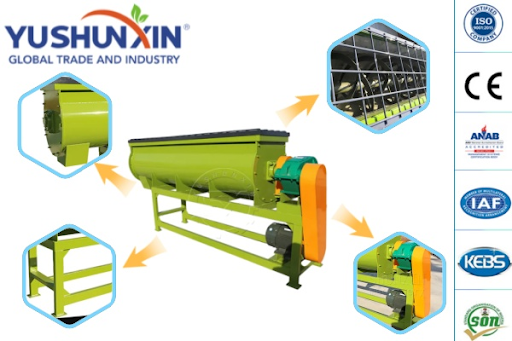
In modern agriculture, effective soil management and nutrient delivery are essential for maximizing crop yields and ensuring sustainable farming. Two key components that support this are limestone pellets and NPK compound fertilizers. Producing these products efficiently requires reliable machinery — including a limestone powder granulation machine for pelletizing minerals and an extruder machine for sale in Pakistan for producing high‑quality NPK fertilizers.
This article explores how limestone pellets are made, the role of extruder machines in fertilizer production, and why investing in advanced equipment is crucial for agricultural and industrial success.
How to Make Limestone Pellet: Turning Powder into Soil‑Friendly Pellets
What Are Limestone Pellets?
Limestone pellets are uniform granules made from limestone powder. They are used as soil amendments to neutralize acidic soils, improve soil structure, and enhance calcium availability for crops. Compared to loose powder, pellets are easier to handle, apply uniformly across fields, and store without dust issues.
Limestone Pellet Production Process
Producing limestone pellets involves several key steps:
1. Raw Material Preparation
The process begins with limestone powder. The raw material must be crushed and screened to achieve a fine, uniform particle size. Proper preparation ensures consistent pellet quality.
2. Granulation
The prepared limestone powder is fed into a how to make limestone pellet. Inside the granulator, the powder is mixed with a binder or water and formed into uniform pellets. The machine uses rollers, discs, or other mechanisms to agglomerate particles into the desired shape.
3. Drying and Cooling
Newly formed pellets contain moisture that must be removed. Drying helps solidify the pellet structure, and cooling ensures they retain shape and strength. Proper moisture control enhances durability and storage life.
4. Screening and Packaging
Finished pellets are screened to ensure consistent size. Any oversized or undersized pellets are recycled back into production. The correctly sized pellets are packaged for distribution to farms, retail outlets, or industrial fertilizer producers.
Benefits of Limestone Pellet Production
- Easy Application: Pellets spread evenly across fields, reducing waste and labor.
- Improved Soil Performance: Pelletized limestone improves pH balance and supports healthier plant growth.
- Reduced Dust: Compared to powder, pellets minimize airborne dust during transport and application.
- Scalable Process: Whether for a small farm or large fertilizer plant, production can be scaled to demand.
Using a high‑quality limestone powder granulation machine ensures consistent pellet quality and efficient production.
Extruder Machine for Sale in Pakistan: Producing High‑Quality NPK Fertilizers
What Is an Extruder Machine?
An extruder machine for sale in pakistan is essential equipment in fertilizer manufacturing, especially for producing NPK (Nitrogen, Phosphorus, Potassium) compound fertilizers. NPK fertilizers deliver balanced nutrition to plants and are formulated with precise nutrient ratios to support all growth stages.
In Pakistan and similar agricultural markets, extruder machines are in demand for their ability to produce dense, uniform granules suited for field application.
NPK Fertilizer Production Using an Extruder
The extrusion process differs from traditional granulation methods in that it compresses blended dry materials into granules without heavy reliance on liquid binders. Typical steps include:
1. Raw Material Blending
Fertilizer materials such as urea (N), phosphate sources (P), and potassium salts (K) are crushed and blended to the desired nutrient formula.
2. Extrusion
Blended materials are fed into the extruder, where heat and pressure compact the mixture into solid granules. This method is ideal for dry granulation and produces hard, durable fertilizer pellets.
3. Cooling and Screening
Extruded granules are cooled to stabilize their structure, then screened to separate uniform sizes from those needing reprocessing.
4. Packaging
Final NPK granules are packaged for distribution to farmers, cooperatives, or agro‑input suppliers.
Benefits of Extruder Machines
- High Production Output: Ideal for industrial fertilizer manufacturing.
- Strong Granules: Produces dense fertilizer pellets with reduced breakage during handling.
- Custom Formulations: Allows precise NPK ratios to match soil and crop requirements.
- Cost‑Effective: Efficient production reduces energy and raw material waste.
- Scalable: Applicable for medium and large plant setups.
An extruder machine for sale in Pakistan helps producers meet local and export market demand with quality fertilizer products.
Combined Advantages of Limestone Pellets and NPK Fertilizer Production
Integrating limestone pellet production with NPK fertilizer manufacturing brings multiple benefits:
1. Enhanced Soil Health
Limestone pellets improve soil pH and structure, increasing the effectiveness of applied NPK fertilizers.
2. Balanced Plant Nutrition
While limestone corrects soil acidity, NPK fertilizers supply essential macro‑nutrients, ensuring robust plant growth from root to fruiting stage.
3. Production Efficiency
Using advanced machinery — such as granulators and extruder systems — streamlines operations, reduces labor, and ensures consistent product quality.
4. Market Competitiveness
Producers with modern equipment can supply premium products to commercial farms, agricultural cooperatives, and export buyers.
5. Environmental Compliance
Modern production plants with efficient machines reduce dust, waste, and energy use, supporting sustainable fertilizer production.
Choosing the Right Machinery
When investing in a limestone powder granulation machine or an extruder machine, consider these factors:
- Production Capacity: Match equipment size to your market demand.
- Automation: Higher automation reduces labor and improves consistency.
- After‑Sales Support: Choose suppliers who provide installation, training, and maintenance.
- Local Service Availability: In Pakistan, local support for spare parts and technicians ensures minimal downtime.
- Energy Efficiency: Machines that recycle heat and optimize energy use reduce operational costs.
Selecting reliable equipment positions your business for sustainable growth in the fertilizer sector.
Conclusion
Mastering how to make limestone pellet and investing in an extruder machine for sale in Pakistan are vital steps for entering or expanding in the modern fertilizer industry. Limestone pelletizing improves soil amendment practices, while extruder machines enable high‑quality NPK fertilizer production.
By using advanced granulation and extrusion technologies, manufacturers can produce efficient, uniform, and cost‑effective products that meet both local and international agricultural standards.