
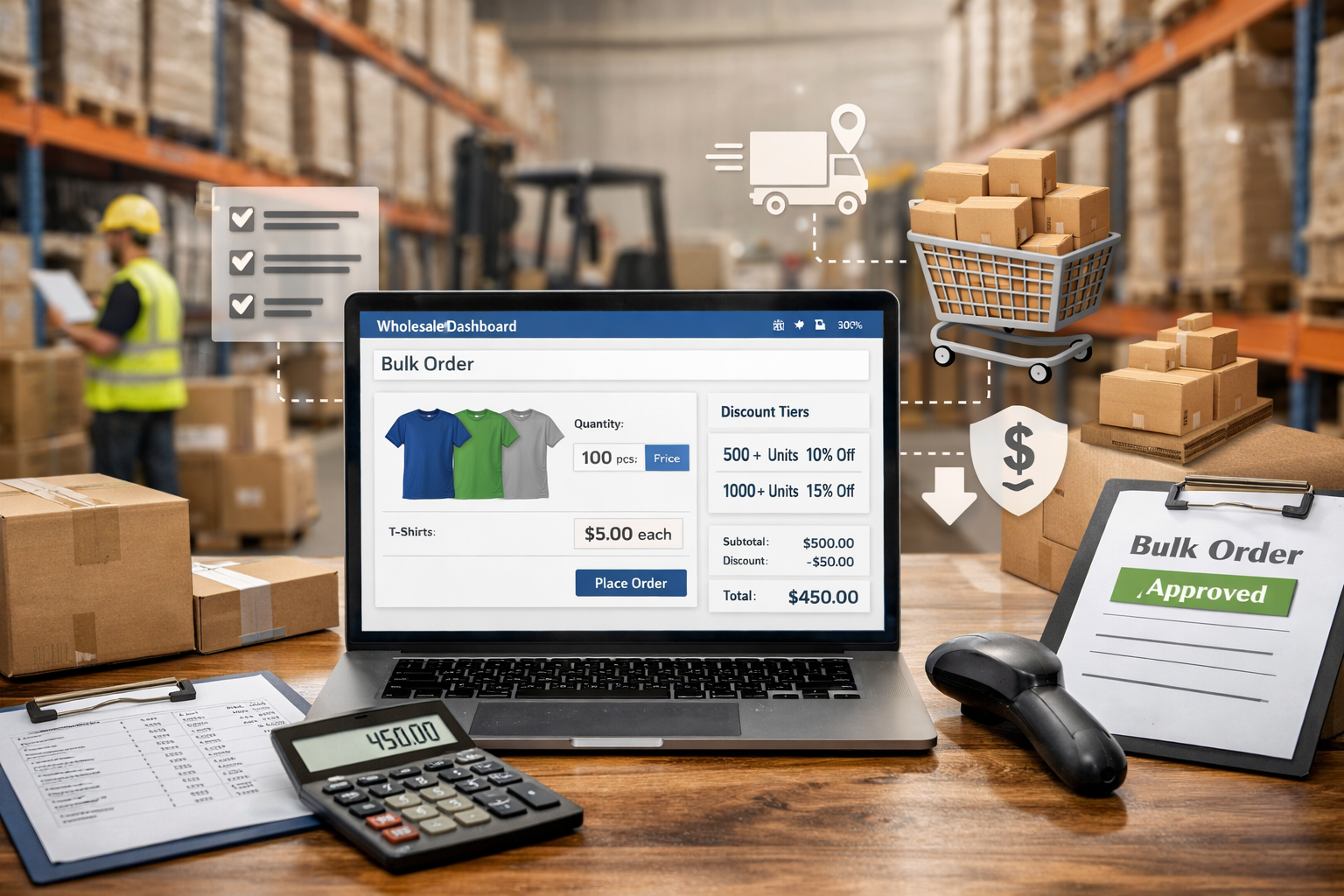
Ordering products in large quantities has always been a core part of how many businesses operate. Retailers stock their shelves through bulk purchases, distributors coordinate supply across multiple locations, and manufacturers often rely on high-volume orders to keep production steady. Yet the traditional process behind bulk purchasing has rarely been simple. Phone calls, spreadsheets, emailed invoices, and manual pricing calculations have long been the norm.
That approach can work, but it slows everything down. When multiple buyers, pricing tiers, and product variations enter the picture, the process becomes complicated very quickly. This is where modern digital tools step in. A well-built wholesale eCommerce platform replaces fragmented ordering systems with a single, organized environment that enables more efficient interactions between buyers and suppliers.
By bringing bulk ordering, pricing logic, and account management into one place, these platforms reduce friction for both sides of the transaction. The result is faster ordering, fewer pricing errors, and a smoother experience for everyone involved.
A Streamlined Ordering Experience
Bulk ordering naturally involves complexity. Buyers may need to purchase dozens or even hundreds of items in a single transaction. They might also be ordering multiple product variations such as sizes, colors, or packaging types.
Wholesale ecommerce platforms simplify this process by creating interfaces designed specifically for high-volume purchasing. Instead of placing multiple small orders, buyers can quickly add large quantities to a cart using bulk order forms, quick-add tables, or product matrices.
Imagine a retailer restocking several product lines at once. Instead of searching through dozens of individual product pages, they can view an organized catalog and place large orders within minutes. Some systems even allow users to upload spreadsheets or reorder from previous purchases with just a few clicks.
This kind of streamlined workflow saves time for purchasing teams and reduces administrative work for suppliers.
Flexible Pricing Structures
One of the biggest challenges in wholesale sales is pricing. Unlike standard online stores where every customer sees the same price, wholesale businesses often use multiple pricing tiers.
For example, a small retailer might receive a different price than a large distributor purchasing thousands of units per month. Special contracts, negotiated discounts, and seasonal promotions can also affect pricing.
Modern wholesale eCommerce platforms handle this complexity through automated pricing rules. Businesses can set up volume-based discounts, customer-specific pricing tiers, and contract pricing within the system.
Once these rules are configured, the platform applies them automatically during checkout. Buyers see the correct price without needing manual adjustments or follow-up communication. This reduces mistakes and ensures pricing remains consistent across every order.
Improved Transparency for Buyers
In traditional wholesale environments, pricing and product availability often require back-and-forth communication. Buyers may need to request quotes or wait for confirmation before finalizing an order.
Digital platforms change that experience by providing real-time visibility. Customers can log in to their accounts and instantly view their personalized product catalog, pricing, and available inventory.
This transparency helps buyers make faster purchasing decisions. They can compare products, check quantities, and calculate total order costs without needing assistance from a sales representative.
From the supplier’s perspective, this also reduces the workload placed on sales teams. Instead of spending time processing routine orders, sales staff can focus on building relationships and identifying new growth opportunities.
Simplified Account and Order Management
Another advantage of wholesale ecommerce systems is centralized account management. Each business customer typically has unique needs, purchasing patterns, and payment arrangements.
Wholesale platforms allow suppliers to create detailed customer profiles that include pricing agreements, credit limits, tax settings, and preferred payment methods. Everything is stored within the system and applied automatically during transactions.
Order histories are also easy to access. Buyers can quickly reorder products they purchase frequently, while suppliers can analyze purchasing behavior to understand customer demand better. These features create a more organized workflow for both sides of the relationship.
Automation That Reduces Operational Errors
Manual wholesale processes often leave room for mistakes. Pricing calculations might be entered incorrectly. Inventory numbers may not be updated quickly enough. Order forms could contain errors that require follow-up clarification. Automation helps eliminate many of these risks.
When inventory levels, pricing rules, and customer data are integrated into one platform, the system can handle many tasks automatically. Stock levels update as orders are placed. Pricing rules apply instantly based on order volume. Invoices and order confirmations are generated automatically.
For growing companies, this kind of automation becomes increasingly valuable. As order volume increases, businesses can maintain accuracy without adding significant administrative overhead.
Better Scalability for Growing Businesses
Wholesale companies often face a turning point when their sales begin to grow rapidly. What worked for a small customer base becomes difficult to manage as the number of buyers expands.
Spreadsheets and manual order tracking simply do not scale well. Eventually, teams find themselves spending more time managing processes than focusing on growth.
Wholesale eCommerce platforms provide the infrastructure needed to handle larger order volumes and more complex pricing models. New customers can be onboarded quickly, and pricing structures can be adjusted without disrupting existing workflows.
This scalability is especially important for businesses that sell across multiple regions, manage multiple product catalogs, or serve diverse types of buyers.
Managing Wholesale Transactions
Wholesale transactions have always involved layers of complexity. Bulk quantities, negotiated pricing, and long-term customer relationships make the process very different from standard online retail. Yet the systems used to manage these transactions have not always kept pace with the needs of modern businesses.
Today’s digital tools offer a better approach. A dedicated wholesale eCommerce platform simplifies bulk ordering, manages complex pricing structures, and creates a more transparent experience for both buyers and suppliers.
Instead of juggling emails, spreadsheets, and manual calculations, companies can operate through a single, organized system. Orders move faster, pricing remains accurate, and businesses gain the flexibility needed to grow.
For organizations that rely on bulk purchasing and distribution, adopting a modern platform is not just a convenience. It is a practical step toward more efficient and scalable operations.