
Ice art festivals sit at the intersection of climate, craft, and community. Unlike permanent monuments, these works are designed to disappear. Temperature, sunlight, wind, and time shape them as much as the artists do. That impermanence is the point. It forces scale, precision, and collaboration to matter in ways they rarely do in other art forms.
Around the world, ice art festivals have evolved in very different directions. Some push engineering limits, turning frozen water into walk-through cities. Others prioritize storytelling, symbolism, or public participation. Still others keep the focus local, allowing people to watch artists work in real time and engage with ice at a human scale.
Below are three ice art festivals that illustrate those differences clearly.
1. Cripple Creek Ice Festival, Colorado, USA
The Cripple Creek Ice Festival reflects Colorado’s approach to winter art. Held in the historic mountain town of Cripple Creek, the festival is about an hour’s drive from Colorado Springs. That proximity makes it a popular winter day trip for both residents and visitors.
Each February, this historic mountain town turns into an open-air ice gallery, with sculptures lining Bennett Avenue and surrounding streets.
What sets this festival apart is that the ice art is created entirely outdoors, exposed to the same elements as the people viewing it. Sculptors don’t just carve for aesthetics. They carve for weather. Sun exposure, wind, and temperature swings directly influence design choices.
Artists often place sculptures in the shadows of buildings to limit direct sunlight, which can weaken ice and cause internal cracking. Warmer daytime temperatures can create fragile stress lines inside the ice, forcing carvers to adjust angles and depth on the fly.
Multiple carving teams work simultaneously, using tens of thousands of pounds of ice across the festival. Visitors can watch the full process unfold, from rough chainsaw cuts to fine hand detailing.
That live element makes the art feel earned rather than staged. Competitions add energy, with spectators voting and returning over several days to see how pieces evolve, or weather changes them.
Traveling to winter festivals in Colorado also comes with responsibility. As noted by Springs Law Group, mountain roads and fast-shifting weather demand caution. Many roads are already stressed. A TRIP report found that 28 percent of major local and state-maintained roads in large cities like Colorado Springs are in poor condition. Winter only raises the stakes. Slowing down and planning ahead matters.
If an accident does occur, contacting an auto accident lawyer in Colorado Springs or elsewhere in the state can help. They can guide you through insurance and legal steps while you focus on safety and recovery.
What is the story behind the song “Up on Cripple Creek”?
The song Up on Cripple Creek by The Band is not about the Colorado town. It’s a fictional narrative about a drifter enjoying a carefree, slightly rough life. “Cripple Creek” works as a symbolic place, representing escape, indulgence, and distance from responsibility rather than a real location.
2. Harbin International Ice and Snow Sculpture Festival, China
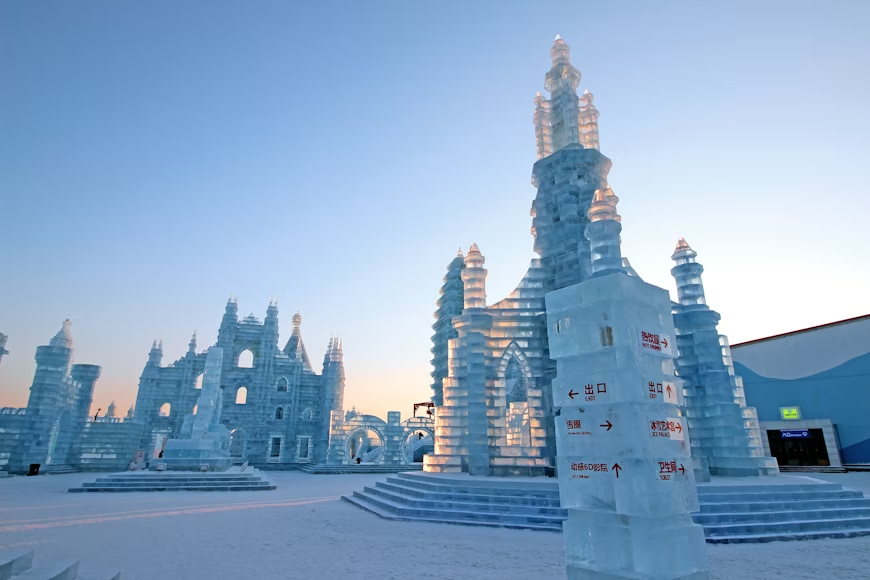
The Harbin International Ice and Snow Sculpture Festival is often described as the pinnacle of ice art, and that reputation comes from its ambition. Each winter, blocks of ice are harvested from the frozen Songhua River and transported to massive festival grounds. From those blocks, artists and engineers construct entire districts of ice buildings, bridges, towers, staircases, and corridors.
What makes Harbin different from other festivals is that ice isn’t treated as sculpture alone. It becomes infrastructure. Visitors don’t just look at the art. They walk through it, climb it, and slide down it.
Ice and Snow World, one of the festival’s main zones, functions almost like a frozen city, complete with streets, plazas, and landmarks. Lighting plays a central role. After sunset, internal illumination makes the thick ice walls glow. The light refracts through the ice, transforming the space into something closer to a dreamscape than a gallery.
Scale is inseparable from climate here. Harbin’s extreme winter temperatures make these structures possible. The cold allows artists to stack ice several stories high without collapse. Engineering precision matters as much as artistic vision. Structural stability, load distribution, and temperature management are constant concerns during construction.
Because of that scale, visiting Harbin requires planning. The festival is vast, exposed, and physically demanding. People move between zones, warming indoors before returning outside. Night visits are essential to understanding the full effect of the lighting, but they also mean colder conditions. The reward is immersion. Few places on Earth allow people to inhabit ice architecture at this level.
When can you see ice sculptures in Harbin?
Ice sculptures in Harbin are best seen from late December through February, during the Harbin International Ice and Snow Sculpture Festival. January is the peak month, when colder temperatures keep sculptures fully intact, and nighttime lighting is at its most striking.
3. Sapporo Snow Festival, Japan
If Harbin represents ice as city-building, the Sapporo Snow Festival represents ice as shared public expression. Held every February, the festival spreads across multiple sites in Sapporo, most notably Odori Park and Susukino. Instead of one centralized venue, the city itself becomes the exhibition space.
The festival began modestly in the 1950s, when local students built a few snow statues in a park. That origin still shapes its character today. While some sculptures are monumental, others are playful, detailed, or culturally specific.
Designs often reference anime, historical architecture, seasonal themes, or international landmarks. Ice and snow coexist here, with snow used for large sculptural forms and ice reserved for finer detail and nighttime illumination.
One of Sapporo’s defining features is collaboration. Sculptures are created by a mix of professional artists, local groups, and international teams. This diversity shows in the final displays. Walking through the festival feels less like touring a single artistic vision and more like moving through many conversations at once.
Another distinction is how seamlessly the festival integrates into daily life. People pass through the exhibits on their way to work or dinner. Food stalls, cafés, and transit stops sit right alongside the art. This reduces the barrier between spectator and participant. You don’t need to dedicate an entire day to engage with the festival. You can experience it in fragments, returning multiple times.
That pacing changes how people interact with the sculptures. Instead of rushing from highlight to highlight, visitors tend to linger, revisit favorites, and notice small details. Ice art here isn’t overwhelming. It’s woven into the rhythm of the city.
How much does it cost to attend the Sapporo Snow Festival?
Most of the Sapporo Snow Festival is free. The outdoor snow and ice sculptures in public spaces like Odori Park and Susukino can be viewed without a ticket. Some special attractions like illuminated displays at night, paid exhibits, or indoor ice art venues may charge a small admission fee.
Seen together, these festivals show how flexible ice can be as an artistic medium. In Cripple Creek, it turns into a hands-on craft shaped by process and place. In Harbin, it functions like architecture on a massive scale. In Sapporo, it has become a shared cultural language.
Every piece will melt. What unites them is impermanence. That urgency sharpens attention, invites participation, and transforms winter from something to endure into something active, social, and worth gathering around.