
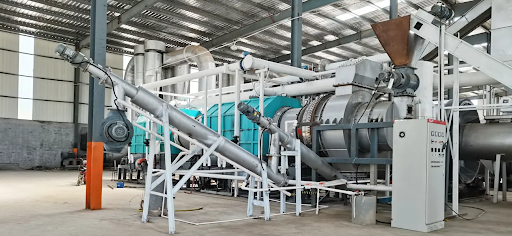
Charcoal production is a crucial industry serving cooking, heating, industrial, and shisha applications worldwide. Traditional batch kilns are often slow, inefficient, and environmentally taxing. Today, modern technologies like large-scale continuous furnaces and integrated charcoal production plants enable businesses to manufacture high-quality charcoal at industrial scales, efficiently and sustainably.
This article explores the advantages, workflow, and practical applications of these modern systems, emphasizing why they are essential for businesses in the charcoal industry.
Large-Scale Continuous Furnaces: Efficient Carbonization Technology
What Is a Continuous Carbonization Furnace?
A large-scale continuous furnaces is an industrial system designed to convert biomass — such as wood, coconut shells, or palm kernels — into charcoal. Unlike traditional batch kilns, continuous furnaces operate non-stop, ensuring uniform quality and higher output.
Key Features and Benefits
- Continuous Production
Continuous furnaces allow 24/7 operation, producing significantly more charcoal than conventional batch methods. - High Carbonization Efficiency
Controlled heating and oxygen levels guarantee complete carbonization, resulting in dense, high-calorific charcoal. - Energy Efficiency
Advanced designs recycle pyrolysis gases, reducing fuel consumption and lowering operational costs. - Eco-Friendly Operation
Modern furnaces minimize smoke and harmful emissions, making the process environmentally compliant. - Versatility
Capable of processing a wide variety of biomass, including wood chips, coconut shells, and palm kernel shells.
Investing in a large-scale continuous furnace ensures consistent, high-quality charcoal suitable for multiple applications.
Charcoal Production Plant: Integrated Manufacturing for Industrial Scale
What Is a Charcoal Production Plant?
A charcoal production plant is a comprehensive system that integrates all stages of charcoal manufacturing: raw material preparation, carbonization, cooling, screening, and packaging. It is ideal for medium to large-scale operations that require consistent quality and high output.
Workflow of a Charcoal Production Plant
- Raw Material Preparation
Biomass is cleaned, dried, and sized to ensure uniform carbonization. - Carbonization
Material is processed in a continuous carbonization furnace to produce high-density charcoal. - Cooling
Finished charcoal is cooled to prevent ignition and preserve structure. - Screening and Packaging
Charcoal is screened for uniform size; off-size pieces are recycled. The final product is then packaged for retail, wholesale, or export. - Automation
Modern plants feature automated feeding, carbonization, cooling, and packaging systems to reduce labor and improve efficiency.
Advantages of a Charcoal Production Plant
- High Production Capacity
Capable of producing tons of charcoal per day, meeting industrial and commercial demand. - Uniform Product Quality
Ensures consistent density, calorific value, and burn time — ideal for cooking, industrial, or shisha use. - Reduced Operational Costs
Automation and energy recycling lower fuel and labor expenses. - Eco-Friendly Manufacturing
Minimizes smoke, dust, and harmful emissions. - Market Versatility
Charcoal produced can be sold for household, industrial, hookah, or export purposes.
A charcoal production plant allows manufacturers to scale operations efficiently while maintaining high-quality output.
Advantages of Modern Charcoal Manufacturing Technology
- Increased Efficiency
Continuous operation and automation enable large-scale production with minimal downtime. - Consistent Product Quality
Controlled carbonization ensures uniformity in density, size, and calorific value. - Cost Savings
Energy-efficient designs and automation reduce fuel and labor costs. - Flexibility
Equipment can process various types of biomass depending on availability and demand. - Sustainability
Advanced systems reduce environmental impact through emission control and recycling of byproducts.
Applications of Charcoal
- Household Cooking: Charcoal briquettes for stoves and grills.
- Industrial Fuel: Energy for metallurgical processes and small-scale industries.
- Shisha Charcoal: Low-smoke, long-burning briquettes for hookah lounges.
- Biochar for Agriculture: Enhances soil fertility and water retention.
- Export Markets: Premium charcoal for international buyers.
High-quality, uniform charcoal allows manufacturers to diversify product offerings and expand market reach.
Choosing the Right Charcoal Equipment
When investing in a large-scale continuous furnace or charcoal production plant, consider:
- Production Capacity
Match the equipment to current and future demand. - Raw Material Supply
Ensure a reliable supply of wood, coconut shells, or other biomass. - Automation Level
Greater automation improves efficiency, reduces labor, and ensures consistent quality. - Quality Control
Equipment should allow precise control over charcoal density, moisture content, and size. - Supplier Support
Opt for suppliers offering installation, training, maintenance, and spare parts.
Choosing the right system guarantees safe, efficient, and profitable operations.
Conclusion
A large-scale continuous furnace combined with a full charcoal production plant represents the future of modern charcoal manufacturing. Continuous carbonization technology ensures high-efficiency production, while integrated plants streamline operations from raw material to packaging.
By adopting these advanced systems, manufacturers can increase production efficiency, reduce operational costs, maintain consistent product quality, and meet growing market demand. Investing in modern charcoal production technology ensures long-term profitability, environmental compliance, and a competitive edge in the global charcoal industry.