
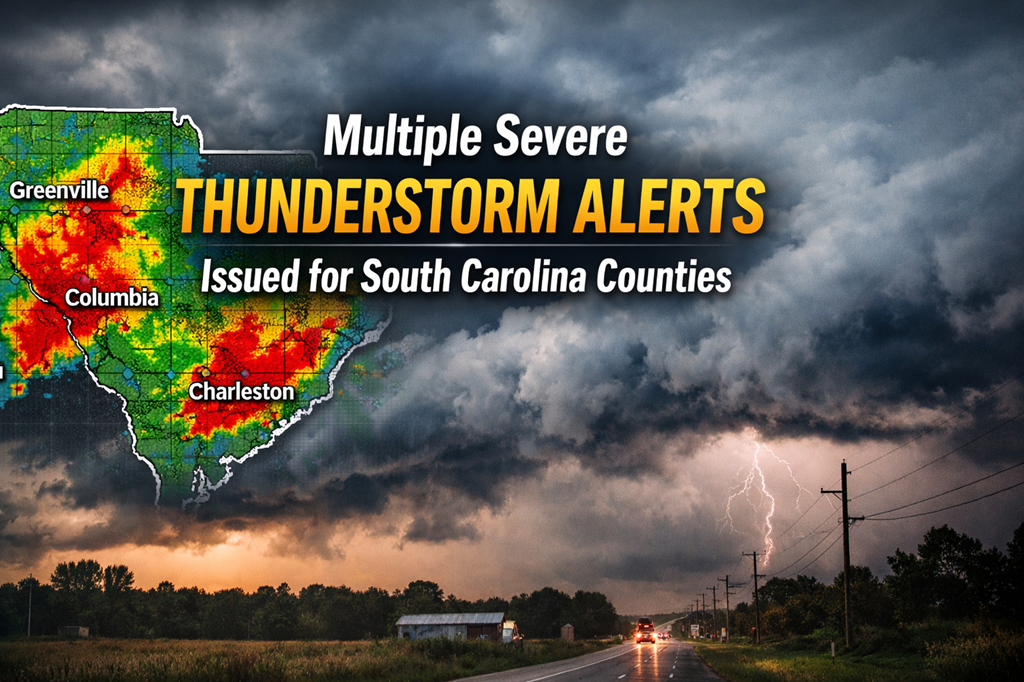
What the Severe Thunderstorm Alerts Mean
Severe thunderstorm alerts are issued by the National Weather Service when storms meet specific danger thresholds.
A storm becomes severe when it is capable of producing:
-
Wind gusts of 58 miles per hour or higher
-
Large hail measuring one inch or more
-
Intense rainfall that may cause localized flooding
When alerts are issued for multiple counties, it usually means a strong storm system is moving quickly across the region, affecting several communities in a short time.
Counties Commonly Impacted During Widespread Alerts
Although every weather event is different, severe thunderstorm alerts frequently include areas such as:
-
Greenville County
-
Spartanburg County
-
Anderson County
-
Laurens County
-
York County
These regions often sit along storm tracks where warm, moist air collides with cooler systems, creating ideal conditions for severe weather.
As storms move, alerts may expand or shift, which is why continuous monitoring is essential.
Why These Storms Escalate So Quickly
Severe thunderstorms in South Carolina often intensify rapidly due to several factors.
First, high humidity fuels storm development.
Next, strong upper-level winds help storms organize and strengthen.
Finally, daytime heat provides the energy storms need to grow taller and more intense.
Because of this combination, storms that seem ordinary at first can become severe within minutes.
Real Impacts Residents May Experience
When multiple alerts are active, impacts can extend beyond heavy rain.
Residents may face:
-
Downed trees and blocked roads
-
Power outages caused by strong winds
-
Property damage from flying debris
-
Sudden flooding in low-lying areas
These effects can disrupt daily life quickly, especially during evening or overnight hours when visibility is reduced.
How Residents Should Respond to Severe Thunderstorm Alerts
Preparation and quick response reduce risk significantly.
During a Severe Thunderstorm Warning
-
Stay indoors and away from windows
-
Secure pets inside the home
-
Avoid driving unless absolutely necessary
-
Monitor official weather updates
Before Storms Arrive
-
Bring in or secure outdoor furniture
-
Charge phones and backup power sources
-
Keep flashlights ready in case of outages
These small actions can prevent injuries and reduce damage.
Community Awareness and Shared Responsibility
When severe weather threatens, communities often respond together.
Neighbors check in on one another.
Local officials share updates and safety reminders.
Meteorologists provide real-time tracking and clear explanations.
This shared awareness helps people make better decisions during rapidly changing conditions.
Social Media and Real-Time Weather Updates
During widespread alerts, social platforms become information hubs.
Residents share radar screenshots, storm videos, and local conditions.
Meteorologists clarify alert boundaries and timing.
Emergency services communicate closures and safety guidance.
However, official sources should always remain the primary reference to avoid misinformation.
Why Staying Alert Matters Even After the Storm Passes
Even after the strongest part of a storm moves through, risks remain.
-
Flooded roads may persist
-
Power lines may be down
-
Additional storms may follow behind the first wave
Therefore, caution should continue until authorities confirm conditions are safe.
Final Thoughts
When multiple severe thunderstorm alerts are issued for South Carolina counties, it is a clear signal to pause, prepare, and pay attention.
These alerts are not meant to cause panic. Instead, they exist to provide timely information that protects lives and property. By understanding what the alerts mean and responding calmly and promptly, residents can navigate severe weather safely.
Storms may be unpredictable, but informed communities remain resilient. With preparation, awareness, and cooperation, South Carolina continues to weather even its strongest storms together.