
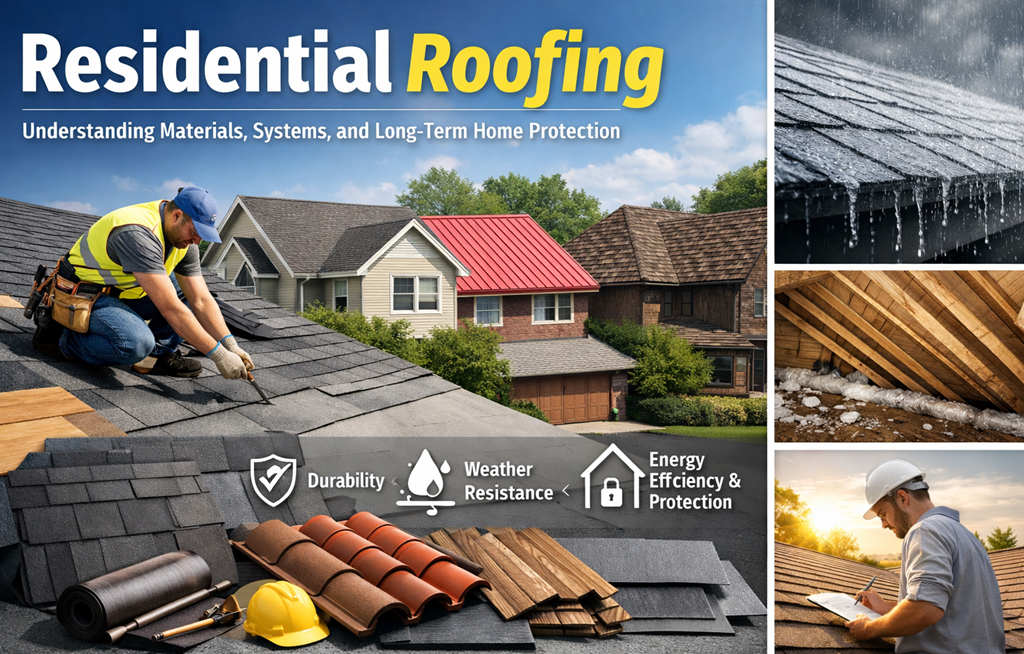
Residential roofing is one of the most important structural components of any home, yet it is often overlooked until a problem appears. A roof does far more than simply cover a house; it protects against weather, supports energy efficiency, and contributes to the overall durability and value of the property. When homeowners understand how roofing systems work and what factors influence their performance, they are better prepared to make decisions that benefit their homes for many years.
A strong roof provides safety, comfort, and peace of mind. It shields the interior from rain, wind, heat, and cold while working together with insulation and ventilation systems to maintain a stable indoor environment. Because the roof is constantly exposed to natural forces, the materials and methods used in its construction must be chosen carefully. This article explores the essential aspects of roofing systems, including materials, structure, installation, maintenance, and long-term planning, to help homeowners gain a complete understanding of what makes a roof reliable and durable.
The Role of Roofing in Home Protection
The roof is the first line of defense between a home and the outside environment. Every day, it absorbs sunlight, resists moisture, and withstands temperature changes. Without a properly designed and maintained roof, water can penetrate the structure, leading to damage such as wood rot, mold growth, and weakened foundations.
Beyond physical protection, a roof also plays a key role in controlling airflow and temperature. When roofing components work together effectively, they help regulate heat transfer, keeping homes cooler in warm seasons and warmer during colder months. This balance improves comfort and reduces strain on heating and cooling systems. For homeowners, understanding these functions highlights why quality roofing is not optional but essential.
Key Components of a Roofing System
A roof is not a single material laid on top of a house. It is a complete system made up of several layers, each with a specific purpose. The visible outer material is only one part of a much larger structure designed to provide long-term protection.
The roof deck forms the base of the system, offering structural support for all other components. Above it lies the underlayment, which acts as a secondary barrier against moisture. Flashing is installed around edges, joints, and penetrations to prevent water from seeping into vulnerable areas. Ventilation elements allow air to circulate, reducing heat buildup and moisture accumulation inside the attic.
When all of these elements are properly installed and maintained, they function together to strengthen the performance of the roof. A failure in any one layer can compromise the entire system, which is why professional planning and installation are so important.
Roofing Materials and Their Benefits
Choosing the right roofing material is one of the most impactful decisions a homeowner can make. Different materials offer varying levels of durability, appearance, and maintenance requirements. Understanding these options allows homeowners to select materials that align with their needs and expectations.
Asphalt shingles are among the most commonly used materials due to their affordability and versatility. They are available in many styles and colors, allowing homeowners to match different architectural designs. While asphalt shingles require periodic maintenance, modern versions are designed to resist wind and weather more effectively than older models.
Metal roofing has gained attention for its strength and longevity. It is resistant to fire, insects, and rot, and it reflects sunlight, which can improve energy efficiency. Although the initial cost may be higher, metal roofing often lasts significantly longer, making it an attractive option for homeowners focused on long-term value.
Tile and slate roofing materials are known for their durability and distinctive appearance. These materials can last for decades when properly installed and maintained. However, their weight requires a strong structural foundation, and installation must be handled with care to ensure reliability.
Wood roofing offers a natural and traditional look that appeals to many homeowners. While it requires regular maintenance and protection against moisture and pests, wood roofing can perform well when properly treated and cared for over time.
The Importance of Professional Installation
Even the best materials can fail if they are not installed correctly. Roofing installation involves precise techniques that ensure materials are aligned, secured, and sealed properly. Professional installers understand how to integrate ventilation, flashing, and drainage systems to prevent leaks and premature wear.
Incorrect installation can lead to problems such as trapped moisture, poor airflow, and uneven surfaces. These issues often result in reduced lifespan and costly repairs. By choosing skilled professionals, homeowners ensure that their roofing systems are built according to industry standards and manufacturer guidelines.
A properly installed roof also supports warranties, which can be voided if installation does not meet specific requirements. This makes professional installation an essential part of protecting both the roof and the homeowner’s investment.
Maintenance and Roof Longevity
Regular maintenance is one of the most effective ways to extend the life of a roof. Small issues, when addressed early, can prevent significant damage and expensive repairs. Routine inspections allow homeowners to identify missing materials, damaged flashing, or debris buildup before these problems worsen.
Keeping gutters clear ensures that water flows away from the roof and foundation, reducing the risk of moisture damage. Removing debris such as leaves and branches prevents water from pooling on the surface. Trimming nearby trees minimizes the chance of physical damage during storms.
Maintenance should be viewed as a proactive strategy rather than a reaction to visible problems. Homeowners who commit to regular care often experience fewer unexpected issues and a longer-lasting roof.
Energy Efficiency and Roofing Design
Modern roofing systems are increasingly designed with energy efficiency in mind. Certain materials reflect sunlight, reducing heat absorption and helping maintain comfortable indoor temperatures. Proper insulation and ventilation further enhance this effect by preventing heat buildup in the attic.
Energy-efficient roofing contributes to lower energy consumption by reducing the workload on heating and cooling systems. Over time, this can lead to noticeable savings on energy costs while also improving indoor comfort. These benefits make roofing design an important consideration for homeowners seeking both performance and efficiency.
Warning Signs That a Roof Needs Attention
Recognizing early signs of roofing problems can save homeowners from extensive damage. Curling or missing materials, water stains on ceilings, and unexplained increases in energy bills may indicate underlying issues. Sagging areas or visible daylight through roof boards suggest more serious concerns that require immediate evaluation.
Ignoring these warning signs can lead to structural damage and reduced indoor air quality. Regular inspections and prompt repairs help maintain the integrity of the roofing system and prevent minor issues from escalating.
Long-Term Planning and Value
A roof should be seen as a long-term investment in the safety and value of a home. Decisions made during material selection, installation, and maintenance planning directly affect how well the roof performs over time. Balancing initial costs with durability, efficiency, and upkeep requirements leads to better outcomes.
Homeowners who take a thoughtful approach to residential roofing often benefit from improved property value and reduced long-term expenses. A well-maintained roof also enhances curb appeal, signaling responsible ownership and attention to detail.
Conclusion: Building Confidence from the Top Down
Residential roofing plays a critical role in protecting the structure of a home and ensuring a safe, comfortable living environment. By understanding roofing materials, system components, installation practices, and maintenance strategies, homeowners can make informed decisions that support durability and performance. A roof is not simply a covering but a carefully designed system that contributes to energy efficiency, structural stability, and long-term value.
When homeowners prioritize quality and ongoing care, residential roofing becomes a dependable asset rather than a recurring concern. Investing in proper design, professional installation, and regular maintenance ensures that the roof continues to protect the home effectively for many years to come.
