
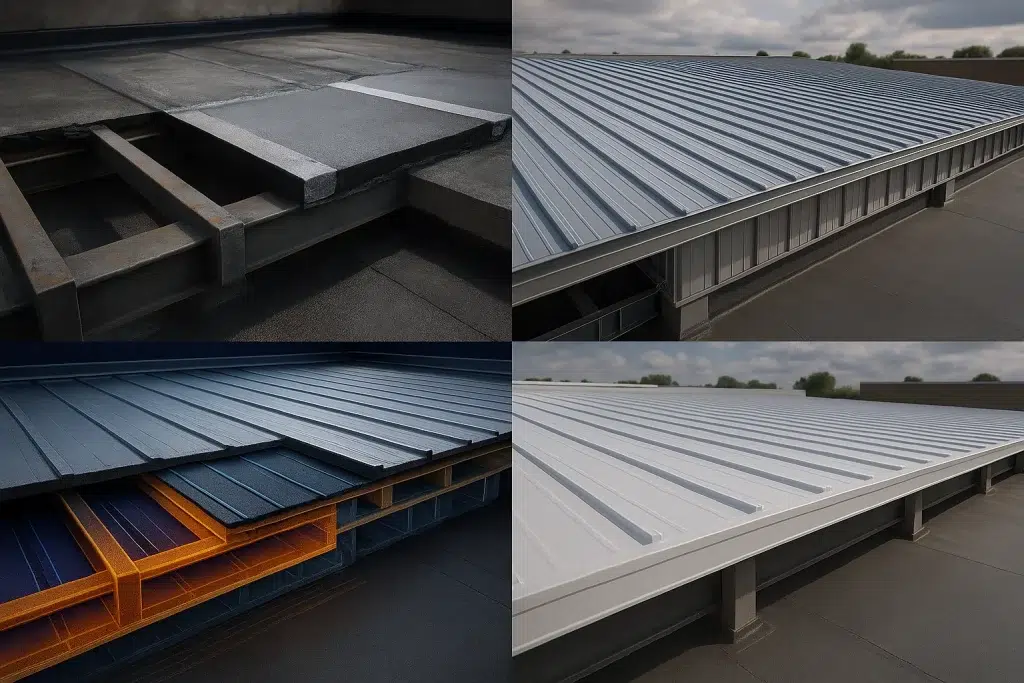
When you think about roofing, sloped designs probably come to mind first. But flat roofs dominate Charlotte’s commercial skyline for good reasons that go beyond aesthetics. These horizontal surfaces represent decades of engineering innovation, combining physics, material science, and climate adaptation into one crucial building component.
Understanding what makes a flat roof structurally sound isn’t just technical jargon—it’s the difference between a roof that protects your investment for 30 years and one that fails after a decade. The science behind flat roofing in Charlotte systems involves careful calculations, material selection, and installation precision that many property owners never see but absolutely depend on.
Why Flat Roofs Work Despite What Gravity Suggests
Here’s something interesting: the term “flat roof” is actually misleading. These roofs aren’t completely flat at all—they have a subtle slope of about 1-2 degrees to help water drain off. This slight pitch represents one of the fundamental scientific principles at work: controlled water management.
Engineers designing flat roofs in Charlotte, NC systems have to account for water pooling, which creates extra weight and potential leak points. The slope ensures water moves toward drainage points instead of just sitting there. This detail alone prevents thousands of dollars in water damage every year.
The structural integrity of these roofs depends on distributing weight evenly across support beams. Unlike pitched roofs, where gravity naturally channels loads downward along slopes, flat roofs transfer weight directly to the building’s structural frame. This requires precise load calculations that factor in:
- The roof membrane and insulation weight
- Expected snow and ice accumulation
- HVAC equipment and other mechanical systems
- Maintenance personnel and equipment access
- Wind uplift forces specific to Charlotte’s weather patterns
Material Science Meets Charlotte’s Climate Demands
Charlotte experiences hot, humid summers and occasional winter freezes—a combination that really tests roofing materials throughout the year. The materials used in flat roofing in Charlotte, NC, installations need to withstand thermal expansion and contraction without cracking or separating.
Modern flat roofing systems typically use one of three membrane types, and each has its own scientific properties. TPO membranes reflect UV rays while staying flexible across different temperatures. EPDM rubber roofing offers exceptional waterproofing through its molecular structure. Modified bitumen combines traditional asphalt technology with modern polymer science for better durability.
Understanding Thermal Movement in Flat Roofing Systems
Think about this: temperature fluctuations cause roofing materials to expand and contract. A 20,000-square-foot commercial roof can actually expand by several inches on a hot summer day compared to a cold winter morning.
Flat commercial roofs in Charlotte, NC, deal with this through expansion joints and mechanically fastened systems that allow controlled movement. Without these provisions, the membrane would tear or buckle under thermal stress. The science here involves calculating how much material will move based on temperature changes and designing flexibility into the system.
Key considerations for thermal performance include:
- Membrane color selection affects heat absorption and UV resistance
- Joint spacing must accommodate the maximum expected expansion rates
- Adhesive types need temperature-appropriate curing properties
- Substrate materials influence overall thermal movement patterns
The Physics of Water Management
Water is, hands down, flat roofing’s biggest enemy. A single inch of standing water across 1,000 square feet weighs over 5,000 pounds. That’s why proper drainage isn’t just recommended—it’s absolutely essential for structural integrity.
Effective drainage in flat roofing in Charlotte applications relies on three components working together:
- Primary drains are positioned at low points in the roof surface
- Scuppers or secondary overflow systems that activate if primary drains clog
- Tapered insulation systems that create positive drainage slopes
The tapered insulation approach deserves special attention here. Rather than relying solely on the structural deck for slope, installers use insulation boards of varying thickness to create drainage pathways. This method adds minimal weight while making sure water flows where it should.
Ponding Water: When Physics Works Against You
Water that sticks around on a roof for more than 48 hours after rainfall is what professionals call ponding. This creates a nasty cycle: the weight of ponding water deflects the roof deck, creating a deeper depression that holds even more water.
Advanced engineering for flat roofs in Charlotte, NC, projects now incorporates deflection calculations right into the initial designs. Structural members are sized not just for static loads but for the dynamic stress patterns that water accumulation creates.
Load Distribution and Structural Support Systems
The structural support beneath a flat roof is where engineering really shows its importance. Steel joists, bar joists, or concrete decks have to handle both dead loads (the roof’s own weight) and live loads (everything else that gets placed on top).
In Charlotte’s climate, what’s most relevant are the concentrated loads from rooftop HVAC units, satellite dishes, and solar panel arrays that are becoming increasingly common on flat commercial roofs in Charlotte, NC.
Point loads from equipment require special consideration. A five-ton HVAC unit sitting on four curb supports creates intense pressure at those four points. Engineers specify load distribution methods like:
- Equipment pads that spread weight over larger areas
- Structural reinforcement beneath heavy equipment locations
- Load calculations that ensure the roof deck doesn’t overstress
Wind Uplift and Attachment Methods
Here’s what most people don’t realize: wind creates negative pressure zones on flat roofs that literally try to suck the membrane off the building. This uplift force can exceed 200 pounds per square foot during severe storms.
Modern flat roofing in Charlotte, NC, installations combat this through multiple attachment methods. Fully adhered systems glue the membrane to the substrate across the entire surface. Mechanically attached systems use thousands of specialized fasteners. Ballasted systems rely on weight—typically river rock or pavers—to hold the membrane down.
Each method has its own scientific merits. Fully adhered systems offer maximum wind resistance but require careful substrate preparation. Mechanical attachment allows faster installation and easier repairs. Ballasted systems add significant weight but provide excellent wind and hail protection.
The Role of Insulation in Structural Performance
Insulation does more than just save energy bills. In flat commercial roofs in Charlotte, NC, applications, it actually contributes to structural integrity by providing dimensional stability and separating the waterproofing membrane from temperature extremes in the building below.
Different insulation materials provide specific structural benefits:
- Polyiso boards offer superior compressive strength for equipment loads
- EPS foam provides lightweight options for weight-sensitive structures
- XPS insulation resists moisture absorption in high-humidity environments
- Mineral wool adds fire resistance while maintaining structural stability
Quality Installation: Where Theory Meets Reality
Even the best-engineered flat roofing system will fail without proper installation. The science only works when it’s translated into precise field practices that experienced contractors follow carefully.
Seam integrity is absolutely critical here. Whether heat-welded, solvent-bonded, or taped, seams must achieve full adhesion without gaps. A microscopic gap allows water infiltration that undermines the entire system. Quality installations of flat roofing in Charlotte systems include rigorous seam testing to verify proper bonding.
Professional installers follow strict protocols during membrane application:
- Surface moisture testing ensures substrates meet dryness requirements
- Temperature monitoring confirms conditions suit adhesive activation
- Overlap measurements maintain consistent seam widths throughout
- Quality checkpoints occur at multiple stages of installation
Long-Term Performance Through Scientific Maintenance
A well-designed flat roof should last 20-30 years, but only with appropriate maintenance. Regular inspections help identify minor issues before they turn into major structural problems.
Drainage system maintenance tops the priority list every time. Leaves, debris, and sediment clog drains and create ponding conditions. Clearing drains twice annually prevents most water-related failures in flat roof in Charlotte, NC, installations.
Membrane inspections reveal punctures, tears, or seam separations early when they’re still easy to fix. Small repairs can extend roof life significantly.
A comprehensive maintenance program for flat roofing in Charlotte includes these essential tasks:
- Biannual drain cleaning and flow testing
- Visual membrane inspections after severe weather events
- Seam integrity checks focusing on high-stress areas
- Equipment curb and penetration flashing verification
- Documentation of all findings and repairs performed
The science behind flat roofing keeps advancing with discoveries and innovations. New materials, improved installation techniques, and better understanding of failure mechanisms make today’s flat roofing in Charlotte, NC, systems more reliable than ever before. But the fundamental principles remain the same: manage water effectively, distribute loads properly, and respect the physics at work on every horizontal surface protecting Charlotte’s buildings.