
Introduction
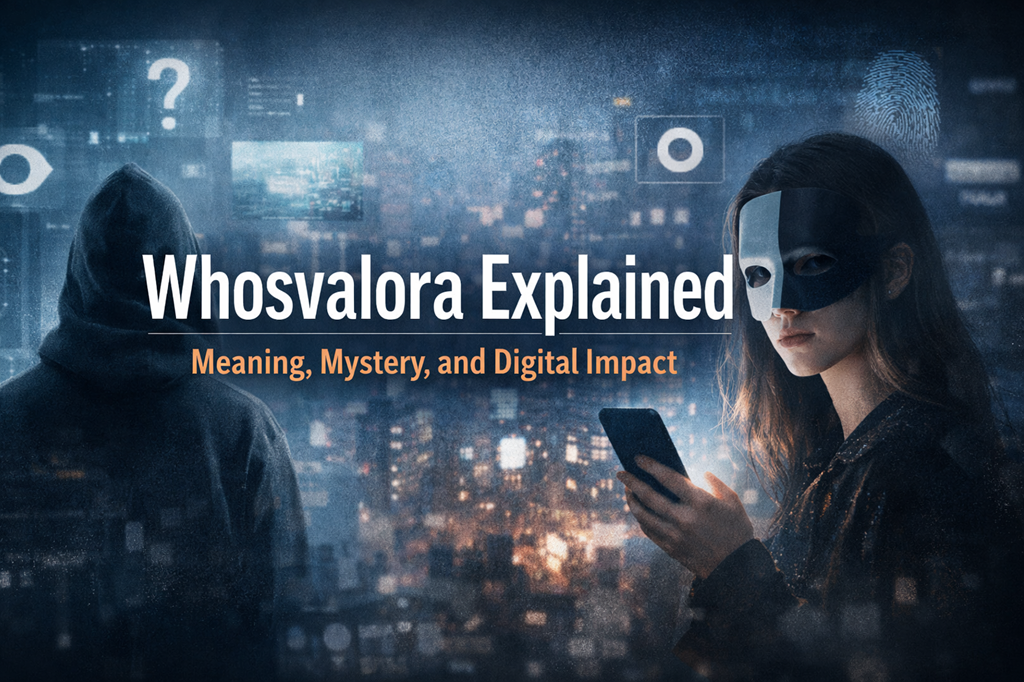
In a digital world dominated by visibility, constant updates, and personal branding, Whosvalora stands out for doing the opposite. Emerging quietly in 2025 and gaining wider attention through 2026, this mysterious online presence captured interest without revealing a face, name, or backstory.
Rather than chasing followers or engagement, Whosvalora relies on restraint, symbolism, and anonymity. As a result, it has become a reference point in discussions about online identity, privacy, and how people choose to exist on the internet today.
This article explains what Whosvalora represents, how it works, and why it has influenced modern digital behavior.
What Is Whosvalora?
Whosvalora refers to a pseudonymous digital persona known for its intentionally limited identity and cryptic online expression. Instead of personal updates or direct interaction, it communicates through abstract visuals, short messages, and symbolic storytelling.
In simple terms, it is not designed to explain itself. Instead, it invites interpretation. Meaning develops through audience reflection rather than creator disclosure.
How Whosvalora Emerged and Gained Attention
An Organic and Unannounced Rise
The earliest traces appeared without explanation or promotion. Posts surfaced sporadically, often lacking context. However, the consistency in tone and style suggested purpose rather than randomness.
Because people could not immediately categorize what they were seeing, curiosity grew. Over time, shares, discussions, and theories increased visibility naturally.
Why the Timing Was Important
This emergence aligned with growing frustration around oversharing and algorithm-driven online pressure. Many users felt exhausted by the expectation to constantly document their lives.
Because of that environment, a quiet and undefined presence felt refreshing. It offered contrast in a space crowded with noise.
The Core Philosophy Behind Whosvalora
Anonymity as an Intentional Choice
Anonymity is central to the concept. Instead of hiding out of necessity, personal identity is deliberately removed to shift focus away from the individual.
Therefore, audiences engage with ideas, emotions, and symbols rather than personality or status.
The “Digital Ghost” Approach
Observers often describe this presence as a digital ghost. It exists across platforms but leaves minimal personal trace. There are no biographies, no personal replies, and no visible life details.
As a result, it feels present yet distant, which deepens intrigue and emotional connection.
Content Style and Online Behavior
Visual Storytelling Over Explanation
The content emphasizes visuals over words. Abstract imagery, muted tones, and symbolic compositions appear frequently. Text, when used, remains minimal and open-ended.
Because explanations are intentionally limited, viewers naturally create their own meaning.
Silence as a Communication Tool
Direct interaction is rare. Comments often remain unanswered, and private messages receive no response.
This silence is not neglect. Instead, it reinforces the idea that reflection matters more than conversation.
Why Whosvalora Became a Viral Mystery
Curiosity Encourages Participation
People instinctively seek clarity. When something resists explanation, interest grows.
Here, unanswered questions encouraged searching, discussion, and speculation. Each interpretation added momentum.
Emotional Connection Without Exposure
Despite avoiding personal storytelling, the content evokes emotion. Viewers often describe feelings of calm, nostalgia, or introspection.
Because people project their own experiences onto the content, engagement feels personal even without personal disclosure.
Cultural Impact and Influence
Redefining Online Identity
Whosvalora influenced how many people think about digital presence. It demonstrated that relevance does not require constant visibility or personal detail.
As a result, more users began experimenting with selective sharing, private profiles, and content-focused identities.
A Shift Away From Oversharing
For years, online culture rewarded exposure. This approach challenged that norm by showing that restraint can also hold power.
It suggested that mystery can coexist with influence.
Digital Privacy and Intentional Footprints
Controlled Presence in a Data-Heavy World
By limiting personal data, this model reduces traceability while maintaining impact. It highlights how intentional design can shape digital footprints.
This approach resonates strongly in an era of growing privacy concerns.
Practical Lessons for Everyday Users
Not everyone wants anonymity. However, there are clear takeaways:
-
Share with intention
-
Focus on meaning rather than metrics
-
Use silence strategically
Common Misconceptions
Not a Verified Individual
There is no confirmed evidence linking this identity to a single person. The uncertainty is intentional and central to its appeal.
Not a Traditional Brand or Influencer
There are no clear monetization patterns, sponsorships, or promotional signals. It operates outside standard digital marketing frameworks.
Why Whosvalora Remains Relevant
As digital culture evolves, people increasingly value depth over noise and authenticity over performance.
Whosvalora remains relevant because it demonstrates an alternative way to exist online. It proves that presence can be subtle, influence can be indirect, and identity does not need full exposure to resonate.
Frequently Asked Questions
Is Whosvalora real?
Yes, the online activity is real. However, the identity behind it remains intentionally undisclosed.
Is it art, commentary, or social experiment?
It functions across all three. Its ambiguity allows it to move between categories.
Can others replicate this approach?
Yes, but success requires consistency, intention, and respect for audience interpretation.
Final Thoughts
Whosvalora is more than a passing online curiosity. It reflects a deeper shift in how people relate to digital spaces. By prioritizing anonymity, symbolism, and restraint, it challenges long-standing assumptions about visibility and influence.
In an increasingly loud digital environment, it quietly reminds us that sometimes the most powerful presence is the one that leaves room for thought.